Shipping one package is easy. Shipping two hundred packages a week is a different problem. Once an online business reaches that scale, the details that seemed minor on a single order, such as how you pay, how long labels take to generate, and how you record costs, start to shape profits and stress levels. For businesses that earn or hold cryptocurrency, an additional question appears: is it practical to pay for bulk shipping labels with crypto?
It can be, with the right setup. This guide is written for small business owners who want a clear picture of how crypto bulk shipping works. It covers when buying in volume makes sense, the workflows that keep batches manageable, the ways to handle price swings, how to keep books clean, and the risk controls worth putting in place before you move real volume through a crypto-paid shipping process.
What "Bulk" Means for a Small Business
There is no official threshold for bulk shipping. For a home-based seller, twenty labels in an afternoon may feel like a lot. For a busy shop, hundreds per day might be normal. What matters is not the number but the shape of the work: repeating the same steps many times, where small inefficiencies multiply.
In practice, bulk label buying tends to involve three things.
Batch processing. Instead of creating each label one at a time, you prepare a group of orders and generate all of their labels in one session.
Rate advantages. Shippers that send higher volumes often qualify for commercial pricing, either directly with a carrier or through a shipping platform that pools volume.
Streamlined payment. Rather than authorising a payment for every parcel, you fund a balance or settle a batch total in one transaction.
If you ship only a handful of parcels a month, none of this may matter. But when you cross into regular weekly volume, every part of the process deserves a second look.
Why Some Businesses Want to Pay for Shipping with Crypto
Businesses that consider paying for shipping in cryptocurrency usually have one or more of these reasons.
They already receive crypto from customers. If part of your revenue arrives in bitcoin or a stablecoin, converting it to fiat just to buy shipping adds cost and steps. Paying for postage in the same asset keeps the flow simple.
They hold crypto as a treasury asset. Some operators keep a portion of reserves in digital currency and prefer to spend it on operating costs at their own pace.
They lack conventional payment options. In some regions, merchants struggle to obtain business cards or to make international payments to shipping platforms.
They value payment privacy. Paying in crypto avoids exposing card or bank details to smaller vendors.
They operate across borders. For sellers who ship between several countries, a single crypto-based payment method can be simpler than juggling multiple currencies and cards.
None of these reasons makes crypto the right choice for every merchant. It is a tool that fits particular situations.
How Crypto Bulk Shipping Works

Carriers themselves generally do not take crypto payments directly. Bulk crypto shipping therefore relies on a third-party platform or reseller that accepts crypto from you and pays the carrier in conventional money. Two payment models are common.
Pay per order or per batch. You prepare a group of shipments, receive a total quote, send crypto to cover it, and download the labels after confirmation. This model is straightforward and avoids leaving funds with the provider.
Prepaid balance or credits. You deposit crypto to fund an account balance. Each label you generate draws down from that balance. This is convenient for frequent shipping because you avoid waiting for confirmations on every order, but it also means the provider holds your funds, so counterparty risk is higher.
Some services support both. Choose the model that matches your comfort level. If you use a prepaid balance, keep deposits modest and top up as needed rather than parking large amounts.
Building an Efficient Batch Workflow
The payment method is only one piece. A dependable bulk process usually includes these steps.
Collect orders in one place. Whether you use an online store platform, a marketplace, or a spreadsheet, gather orders into a single list with recipient names, addresses, contact details, and order numbers.
Standardise package data. Assign default weights and dimensions to your common products or box sizes. Consistent data means fewer surprises on postage cost.
Import orders in bulk. Many label platforms accept CSV files. A well-formatted file with columns for name, street address, city, region, postal code, country, weight, and service level lets you create dozens or hundreds of labels at once.
Validate before paying. Run address validation, check for missing fields, and review any warnings. Fixing errors before you pay is easier than correcting labels later.
Pay the batch total. Send the amount due, wait for confirmation, and download the label file.
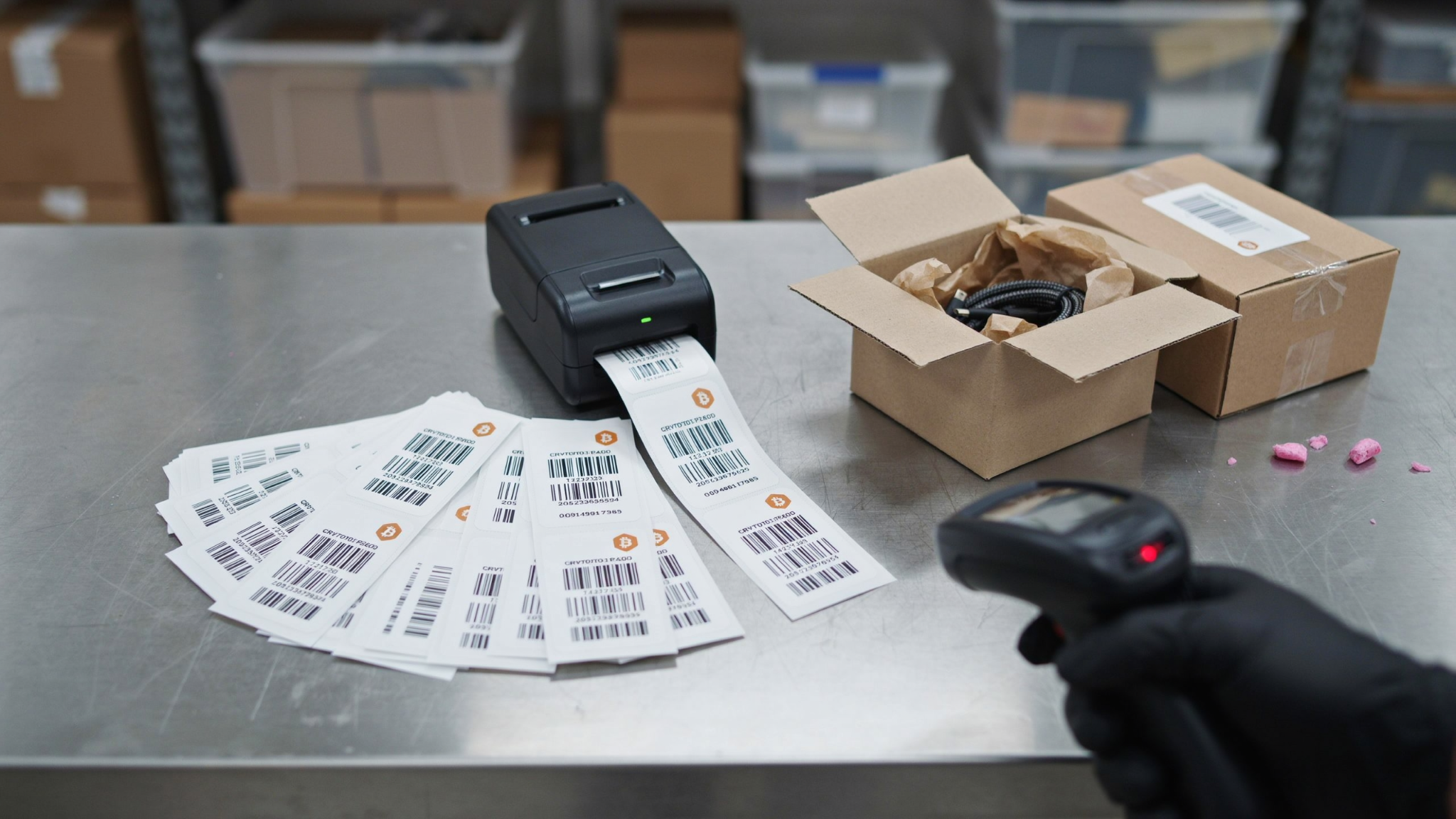
Print in bulk. A thermal printer using 4x6 labels is the standard tool for high volume because it is fast, cheap to run, and produces durable labels.
Return tracking to your store. Upload or sync tracking numbers so customers receive notifications and your records stay accurate.
Small improvements at each step compound. Saving thirty seconds per order on a hundred orders is nearly an hour back.
Choosing Carriers and Services in Bulk
The best carrier for a business depends on package size, weight, destination, and the level of service customers expect. Some general considerations follow.
Lightweight parcels often ship most cheaply through postal services, such as USPS Ground Advantage in the United States or Canada Post's parcel and packet services in Canada.
Heavier or bulkier items may be cheaper through private carriers, depending on zones and dimensional weight rules.
Time-sensitive orders may justify express services, but these should be priced into your product or shipping fees.
International parcels need customs forms and clear item descriptions, and they can involve duties and taxes that affect your customers.
Before committing to a crypto-paid workflow, confirm that the provider supports the specific carriers and services you rely on, plus the size and weight ranges of your typical packages. A provider that covers only a fraction of your mix may force you to run two systems.
Handling Price Swings and Volatility
Volatility is the most obvious concern for a business paying regular expenses in a volatile asset. There are several ways to manage it.
Use stablecoins for operating costs. Stablecoins pegged to a fiat currency remove most of the price risk. If a provider accepts them, you can hold a shipping budget in a form that behaves like dollars while still paying in crypto.
Convert only what you need. If you receive revenue in bitcoin, allocate a fixed portion to a shipping wallet each week or month and spend from it.
Rely on short quote windows. Most providers lock the price for a limited time when generating a quote. This protects you from movement between quoting and paying.
Avoid large prepaid balances. Depositing a month of shipping costs in one go exposes you to both price movement and provider risk.
Track the fiat value. Record what each payment was worth in your accounting currency at the time of purchase. This is essential for tax reporting, and it helps you see your true shipping costs.
Costs to Compare
A bulk shipping decision should be based on total cost per label, not just headline postage.
Postage price. Compare the provider's rate to the carrier's retail price and to commercial pricing if you qualify.
Service fees. Look for per-label fees, percentage markups, monthly plans, or minimum spend requirements.
Network fees. Each crypto payment carries a transaction fee. Batch payments spread this cost across many labels, which is one advantage of paying per batch rather than per order.
Adjustments and surcharges. Carriers may add charges for incorrect weight, oversized packages, address corrections, or residential delivery. Ask whether the provider passes these on.
Time cost. A cheaper option that requires manual work may not be worth it. Measure how long your workflow takes.
To evaluate fairly, run the same batch of test shipments through two or three options and compare the actual all-in totals.
Keeping Clean Books
Bookkeeping is where crypto-paid shipping can become messy if you are not careful. The key is to treat each payment as two facts: the shipping expense and the disposal of a crypto asset.
Record the expense. Log the label cost in your accounting currency, using the fair market value of the crypto on the date of payment.
Record the asset movement. Note the amount of crypto spent and the cost basis of those coins. Depending on where you operate, spending crypto may trigger a capital gain or loss, or may count as business income or expense in your jurisdiction.
Keep invoices and receipts. Ask the provider for itemised receipts showing the date, the number of labels, postage amounts, fees, and payment references.
Use consistent categories. Tag shipping costs separately from packaging, marketplace fees, and other expenses so you can measure margins.
Reconcile regularly. Match wallet transactions to invoices weekly or monthly rather than at year end.
Talk to a professional. Tax rules on digital assets differ by country and change over time. An accountant with crypto experience can help you set up a process that survives an audit. This article is general information and not tax advice.
Risk Controls for Volume Shippers
The more you rely on a provider, the more a failure hurts. A few precautions reduce exposure.
Start small. Test the provider with a modest batch before moving a full week of orders.
Diversify. Keep a backup way to buy labels, such as a card-based platform, so a problem with one supplier does not halt your shipping.
Read the terms. Look for details on refunds, voided labels, lost parcels, and how disputes are handled.
Watch for pricing that seems impossible. Rates far below what commercial accounts can achieve may indicate labels created through improper means, which carriers can cancel.
Limit stored funds. If the provider uses a prepaid balance, deposit only what you expect to use soon.
Protect wallet security. Use a dedicated wallet or account for business payments, enable strong authentication, and separate it from your long-term holdings.
Safeguard customer data. Uploading customer addresses to a third party involves privacy obligations under laws such as PIPEDA, GDPR, or state privacy statutes, depending on where you and your customers live. Share only what is needed.
Plan for delays. Crypto confirmations can be slow during congestion. Build buffer time into your shipping schedule, and consider faster payment methods like Lightning or stablecoins on low-fee networks when time matters.
A Simple Pilot Plan
If you want to test the waters, a low-risk pilot can look like this.
- Choose a provider that supports your main carrier and service.
- Ship ten to twenty ordinary orders using crypto-paid labels.
- Compare the total cost with your usual method, including network fees.
- Check tracking scans, delivery times, and any postage adjustments.
- Review how customer support handled any questions.
- Record everything in your books as if it were permanent.
- Decide whether to expand, adjust, or stop based on the results.
A pilot gives you real numbers instead of assumptions.
Conclusion
Bulk shipping labels with crypto are a practical option for the right kind of small business. The approach works best when you already deal in digital assets, when you have a structured batch workflow, and when you judge providers by total cost and reliability rather than by the novelty of the payment method.
The steps are straightforward: choose a provider that supports your carriers, prepare clean order data, pay per batch or from a modest prepaid balance, and manage volatility with stablecoins or fixed allocations. Then protect yourself with a pilot, a backup shipping method, careful bookkeeping, and attention to data privacy. Handled this way, paying for business shipping with bitcoin or other crypto can become a routine part of your fulfilment operation rather than a risky experiment.
Frequently Asked Questions
How much volume justifies a bulk workflow?
There is no fixed number. A useful test is time: if label handling takes you more than an hour a day, batching and importing is probably worth setting up.
How do I avoid a label inside a batch?
Most platforms let you cancel individual labels, and refunds may come as credit rather than crypto. Note the deadline, and keep a running list of voids.
How can I reduce network fees on batch payments?
Pay one combined total instead of many small payments, choose a lower fee rate when the network is quiet, or use Lightning or a low-fee stablecoin network.
How should I handle returns in bulk?
Set a return policy, decide who pays for return labels, and log expected returns in your spreadsheet so you can reconcile refunds and restocking.
How do I price shipping for customers?
Use average label cost by weight band plus packaging and handling. Review it monthly, and consider free-shipping thresholds only after you know your margin.
How do I forecast a shipping budget in crypto?
Multiply average label cost by expected weekly volume, add a buffer for surcharges, and hold that amount in a stablecoin to avoid surprises.
How do I give staff access safely?
Use role-based accounts, per-person spending limits, and, for larger balances, a wallet that requires multiple approvals. Never share a single login.
What exchange rate should I record for audits?
Choose one consistent, documented rate source, such as a major exchange's price at payment time, and use it for every entry so your figures are defensible.
How do peak seasons change things?
Carriers may add surcharges and cut-off dates, and network congestion can slow confirmations. Fund your wallet earlier and ship batches sooner.
Can I mix carriers in one batch?
Some platforms compare carriers per order, while others require separate batches. Splitting batches by carrier is simpler to reconcile.