Canada is one of the more crypto-friendly countries in the world. Bitcoin exchanges operate under Canadian regulation, retailers accept digital currency, and a large community of holders, miners, and small business owners uses crypto in daily life. So it is natural to wonder whether that enthusiasm extends to the national postal service. Can you buy Canada Post labels with bitcoin, or is crypto postage in Canada a myth?
The situation is similar to the one in many countries. Canada Post does not run a bitcoin checkout of its own, but independent sellers have created ways to purchase Canada Post shipping labels with cryptocurrency. This guide explains how that works in a Canadian context, what services you can expect, where customs forms and taxes come in, and how to protect yourself while using bitcoin shipping in Canada.
Does Canada Post Accept Bitcoin?
At the time of writing, Canada Post's own payment channels are built around traditional methods. Customers at a post office typically pay with cash, debit, or credit cards. Online shipping tools accept major credit cards, and business customers may use invoicing arrangements after setting up a commercial account. There is no built-in crypto payment option on its main tools.
Canada Post is a Crown corporation, which means it operates under federal ownership and public accountability standards. Those structures tend to favour conventional payment systems that are stable, reportable, and easy to reconcile. That is one reason you will not find a "pay with bitcoin" button on its website. Payment methods can change, so check its current policies if this matters for your decision.
The practical result is that the phrase "Canada Post labels bitcoin" almost always refers to an indirect purchase through a third-party seller.
How Crypto Postage in Canada Works
A crypto postage seller acts as an intermediary. The process typically follows a simple model.
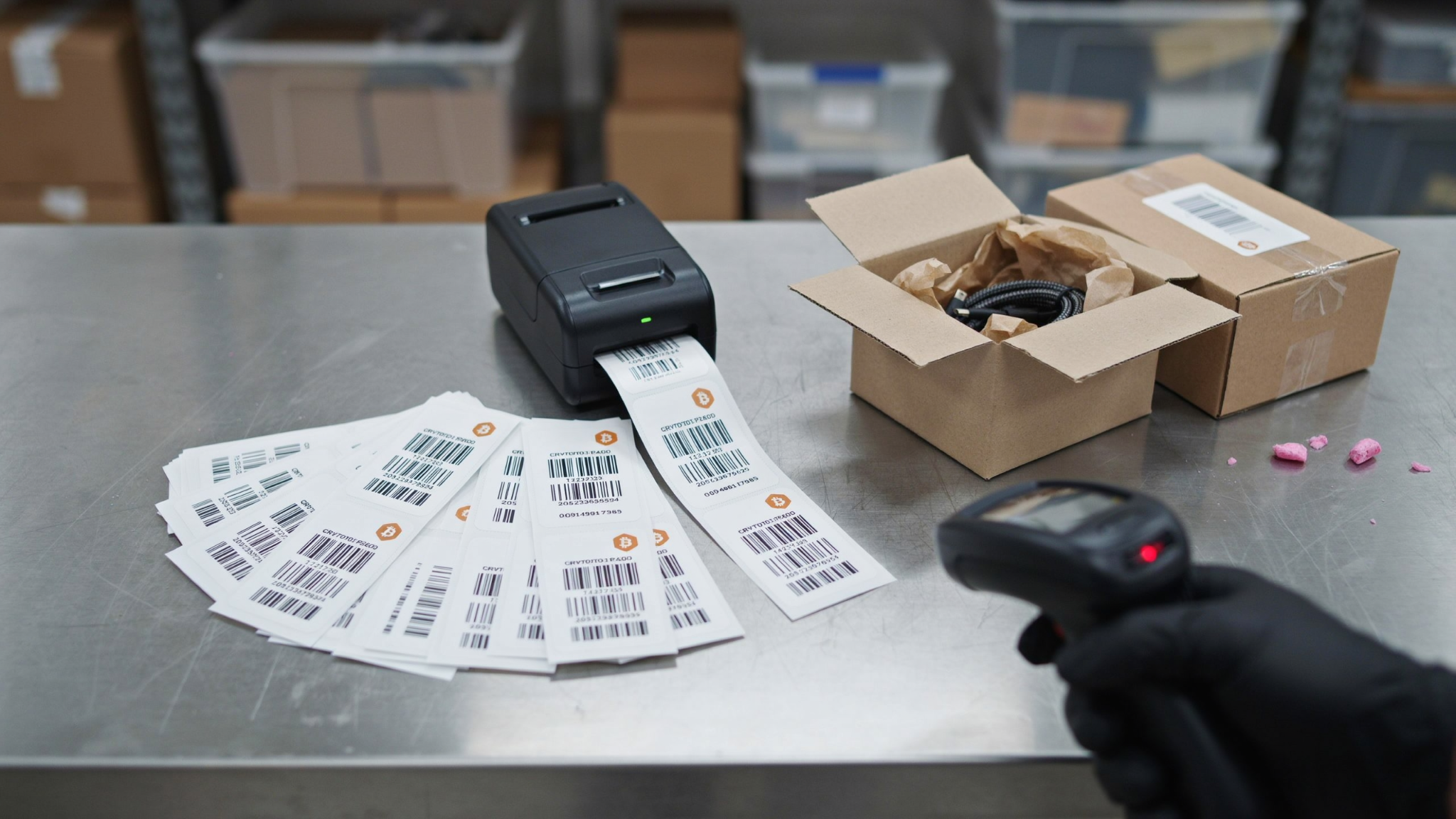
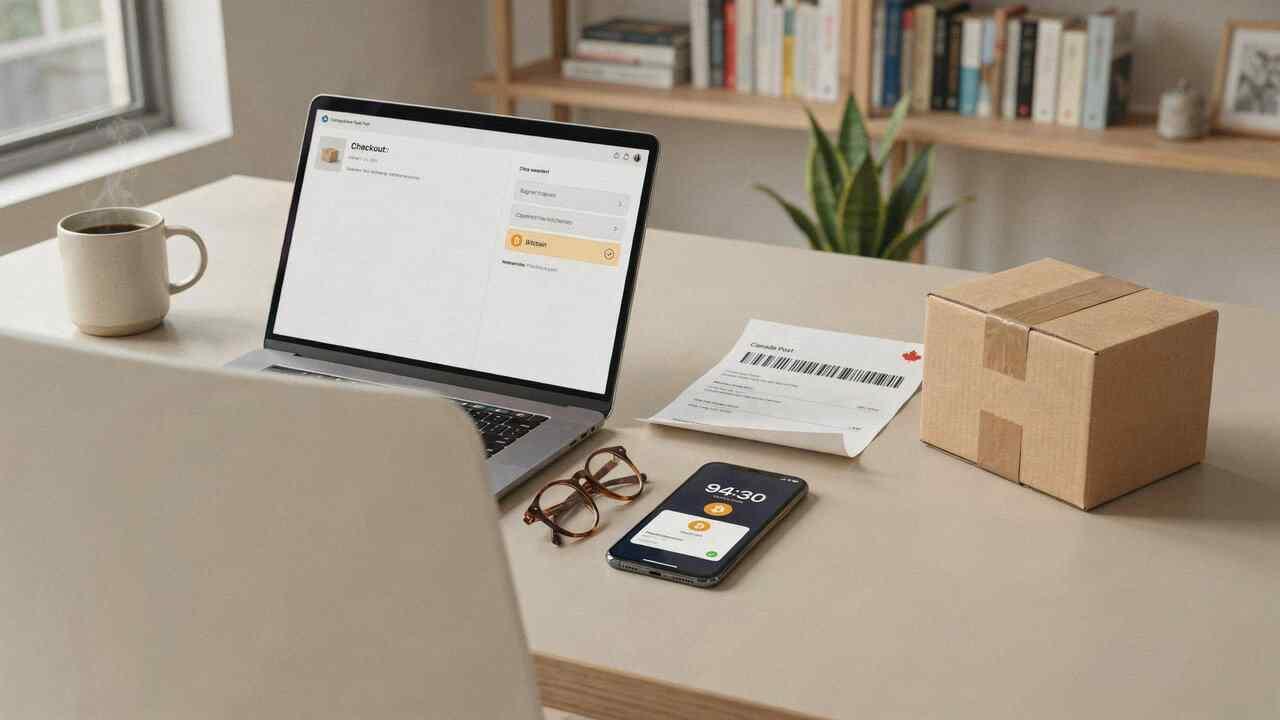
You choose a Canada Post service, enter package and address details, and receive a quote in Canadian dollars. The seller converts that amount to bitcoin or another supported coin, and you send the payment from your wallet. After the payment is confirmed, the seller uses its own account and conventional funds to buy the postage from Canada Post. You then download a label containing the barcode that identifies the shipment.
From Canada Post's perspective, the label is a standard one that was purchased through a shipping account. From your perspective, you paid in crypto and received a printable label. The seller absorbs the conversion step and earns its margin through fees or markups.
Because Canada Post has its own systems for validating postage, the legitimacy of the underlying purchase is what makes the label reliable. That is why choosing a trustworthy seller matters more than the payment method.
Canada Post Services You May Be Able to Buy
Not every seller offers every product, but these are the services most commonly mentioned by Canadian shippers.
Regular Parcel. The economy option for domestic packages, with slower delivery times but lower prices. Suitable when speed is not critical.
Expedited Parcel. A faster domestic service that typically arrives within a few business days depending on origin and destination.
Xpresspost. A quicker option with tracking and, in many cases, delivery confirmation and built-in coverage.
Priority. The fastest service, aimed at time-sensitive shipments.
Small Packet and Tracked Packet. Options for lightweight international items. Small Packet services are designed for items under two kilograms, and Tracked Packet adds tracking for destinations such as the United States.
International Parcel and US parcel services. For heavier or higher-value shipments to the US and overseas, with options like Expedited Parcel USA and Xpresspost USA.
Coverage depends on the seller. Some focus on domestic services, while others concentrate on cross-border labels to the US. Check that the exact product and destination you need are listed before you send any crypto.
Step by Step: Buying a Canada Post Label with Bitcoin

Here is a general workflow for purchasing a label.
1. Prepare the package. Weigh it accurately and measure its dimensions. Canada Post uses weight and size to set prices and can adjust charges if the data on the label is wrong.
2. Confirm the destination. Use the postal code and address exactly as they should appear. Canadian postal codes follow a letter-number-letter pattern, such as A1A 1A1, and a mistake can send a parcel to the wrong sorting facility.
3. Choose your service and compare prices. Get a quote from the crypto seller, then compare it with the price on Canada Post's own site and with any small-business discounts you may qualify for.
4. Pay in crypto. Send the exact amount to the address or QR code within the quote window. If you use the Lightning Network and the seller supports it, payment can settle in seconds.
5. Wait for confirmation. On the main bitcoin network, this can take from a few minutes to an hour, depending on fees and congestion.
6. Print and attach the label. Use a laser printer, an inkjet, or a thermal label printer. Make sure the barcode is crisp and unwrinkled. Tape all edges so it does not peel.
7. Drop off or arrange pickup. Bring the parcel to a Canada Post location or schedule a pickup if that is available for your account or service.
For cross-border shipments, complete the customs steps in the next section.
Customs, Duties, and Cross-Border Shipping
Shipping from Canada to the United States or overseas requires customs documentation. Depending on the service and contents, this may involve an electronic customs declaration or a printed form attached to the package. The declaration describes what is inside, its value, and its country of origin.
A few points are worth knowing.
Accurate descriptions matter. Vague entries like "gift" or "misc" can cause delays. Describe items in plain terms, such as "cotton t-shirt" or "paperback book."
Duties and taxes depend on the destination. The receiving country decides what duties and taxes apply. Rules have shifted in recent years in several countries, especially for low-value shipments into the United States, so check current requirements before you promise customers that a shipment is duty-free.
Trade agreements may help. Goods that qualify under the Canada-United States-Mexico Agreement may receive preferential treatment, but eligibility depends on the product and documentation.
Restricted items stay restricted. No payment method changes what can be mailed. Batteries, liquids, and other regulated goods have specific rules.
The reseller's label does not replace your responsibility for correct customs paperwork. You remain the shipper of record in practical terms.
Taxes and Bookkeeping for Canadian Crypto Users
Paying with cryptocurrency has tax implications in Canada. The Canada Revenue Agency treats crypto as a commodity rather than currency. When you use it to pay for goods or services, the transaction is generally treated as a disposition, which means you may need to calculate a capital gain or loss. For people whose crypto activity looks like a business, the income may be treated as business income instead.
Some points to keep in mind:
- Record each transaction. Note the date, the amount of crypto spent, its Canadian dollar value at that time, and the seller's receipt.
- Track adjusted cost base. Your gain or loss depends on what you originally paid for the coins.
- GST and HST. Sales taxes may apply to the label purchase depending on the seller and your province. Business owners registered for GST or HST may claim input tax credits with proper documentation, so ask whether the seller provides tax-compliant invoices.
- Consider professional advice. Rules are detailed and change over time. A Canadian accountant who understands digital assets can help.
This article is general information and not tax advice.
Advantages of Buying Postage with Bitcoin in Canada
There are several reasons Canadian shippers explore this option.
Keeping funds in crypto. Small-business owners who receive bitcoin from customers can use the same funds for shipping without converting to Canadian dollars first.
Payment flexibility. People who prefer not to use cards online, or who lack one, still have a way to buy postage.
Privacy preferences. Paying in crypto reduces the financial details shared with the seller, though it does not remove the need for addresses or customs details.
Cross-border convenience. For sellers who ship to American customers, one crypto-paid workflow can cover both Canadian and US shipments if the provider supports both.
These are convenience factors rather than guaranteed savings, so it pays to compare total costs.
Comparing Costs: What to Look At
Before you decide, compare the full price of shipping the same parcel through several routes.
Canada Post retail price. The counter or online price for a standard customer.
Small-business or commercial pricing. Canada Post offers programs for businesses that ship regularly, which can lower prices considerably. If you qualify, this becomes your benchmark.
Third-party quote in crypto. Convert the quoted bitcoin amount into Canadian dollars at the current rate, then add the network fee for your transaction.
Service fees. Note any flat charges or percentage markups.
Time and convenience. A cheaper label that takes half an hour of extra effort may not save money overall.
A crypto label is worth choosing when its total cost, plus the convenience it gives you, beats the alternatives. If it does not, using a card on Canada Post's own tools may be the better option.
Risks and Red Flags
Using an independent seller introduces some risks, and you should approach them with the same caution you would use for any online purchase.
Irreversible payments. Once a crypto transaction confirms, it cannot be recalled. If a seller stops responding, you may not be able to recover the money.
Label cancellation. Postage bought through misuse of payment methods can be voided by the carrier. A cancelled label may cause the parcel to be returned or delayed.
Unrealistic discounts. Prices well below what a business account can achieve are a warning sign.
Vague terms. Look for a clear refund policy, information about lost or damaged parcels, and a way to contact support.
Data exposure. The seller sees the sender and recipient addresses. Review its privacy statement.
Regulatory awareness. In Canada, businesses that deal in virtual currency as a service may have obligations under federal anti-money-laundering rules. Choose sellers that operate transparently.
A sensible precaution is to run a small test with a low-cost domestic label before sending anything valuable or placing a large order.
Practical Tips for Canadian Shippers
A few habits can save money and stress.
- Check postal codes twice. Errors are one of the most common causes of delays.
- Use appropriate packaging. Weather, distance, and handling in a large country put stress on parcels.
- Consider rural and remote delivery. Delivery times may be longer for northern and remote communities.
- Keep copies. Save receipts, tracking numbers, and customs declarations.
- Communicate with recipients. Share tracking details so buyers know what to expect.
- Review service updates. Carrier schedules and rules can change, so check for notices before major shipping periods.
Conclusion
You can buy Canada Post labels with bitcoin, but only indirectly. Canada Post has not built crypto payments into its own tools, so independent sellers step in, take your digital currency, purchase the postage, and hand you a printable label. The result works like any other Canada Post label as long as the underlying postage is legitimate.
For Canadians who hold crypto, run online shops, or prefer not to use cards, bitcoin postage in Canada can be a useful convenience. It also brings trade-offs: irreversible payments, network fees, uneven seller quality, customs paperwork for cross-border parcels, and tax record keeping under Canadian rules. Compare the total cost with Canada Post's own prices, read a seller's terms carefully, try a small order first, and keep good records. With those steps in place, crypto can be a practical extra way to pay for shipping in Canada.
Frequently Asked Questions
What happens if no one is home to receive the parcel?
Canada Post typically leaves a notice card and holds the parcel at a nearby post office for a limited period, often about two weeks, before returning it.
How does tracking work?
Each label has a tracking number you can enter on Canada Post's site or app. Early statuses such as electronic information submitted appear before the first physical scan.
How is customs data sent?
International labels usually carry an electronic customs declaration tied to the barcode, so the details you enter at purchase must match the parcel's real contents and value.
What are the weight and size limits?
Domestic parcels are generally capped around 30 kg, with length and girth limits that vary by service. Check Canada Post's current maximums before buying.
Is any insurance included?
Some faster services include limited coverage, often $100, while Regular Parcel generally does not. Extra coverage can be added, and claims need proof of value and proper packaging.
Can I buy return labels?
Some sellers offer prepaid return labels, and Canada Post has its own return options. Decide who pays, set a return window, and verify how unused labels are refunded.
Do labour disruptions affect crypto labels?
Canada Post has faced strikes and slowdowns in recent years, which can delay parcels regardless of payment method. Check service notices, and ask whether labels stay valid during a disruption.
Can I combine Canada Post small-business discounts with a crypto seller?
Usually not. Those discounts are tied to your own Canada Post account, while a reseller sets its own pricing, so compare both.
Should I choose a Small Packet or Tracked Packet?
Small Packet options are cheaper but generally offer little or no tracking. Tracked Packet costs more and gives visibility, which reduces where-is-my-order inquiries.
Can I ship to PO boxes or rural routes?
Small parcels can often be delivered to a postal box, while larger ones may trigger a notice card. Rural addresses may add days, so include a phone number.