The United States Postal Service moves billions of parcels and letters every year, and for anyone who sells online, it is often the cheapest way to ship lightweight packages. It is also where a common question begins for people who hold cryptocurrency: is there a way to buy USPS labels with bitcoin? Searches for a USPS bitcoin payment option, or for USPS crypto services, have grown as more sellers and shoppers keep part of their money in digital assets.
The honest answer has two parts. USPS itself does not currently offer a crypto checkout on its own tools, so you cannot pay the agency directly in bitcoin. But a market of independent resellers has grown up around that gap, selling USPS shipping labels for cryptocurrency. This guide explains how that arrangement works, what kinds of USPS services you can typically buy, how to avoid common mistakes, and what to weigh before you rely on crypto USPS labels for your shipping.
Does USPS Accept Bitcoin Directly?
As of this writing, USPS's own payment channels are built around conventional methods. At a Post Office counter, customers commonly pay by cash, check, debit card, or credit card. On USPS.com, the Click-N-Ship tool and the Postal Store accept cards and certain digital wallets. Businesses with commercial accounts can pay through meter or account-based arrangements. None of these lists cryptocurrency as an option.
Payment policies can change, so it is smart to check USPS's current guidance before assuming anything. But the more useful point is structural. USPS is a federal agency, and it works within government accounting and procurement rules. Accepting a volatile asset like bitcoin would require decisions about custody, conversion, and reporting that have not been part of its standard offerings.
That means any service telling you that you can pay for USPS shipping with bitcoin is doing so indirectly. Understanding how that works is the key to using it safely.
How USPS Postage Is Normally Purchased
To see where crypto fits, it helps to know the standard ways to buy USPS postage.
Retail counter. You bring a package to a Post Office, a clerk weighs it, and you pay the retail price. This is simple but often the most expensive option for parcels.
USPS.com and Click-N-Ship. You enter details online, pay by card, and print a label at home. USPS typically offers a small discount off the counter price for online purchases.
Authorized shipping software. Many third-party platforms are approved by USPS to sell postage, often called PC Postage. They connect to USPS systems, hold funds or take payments from you, and generate labels. Some of these platforms receive commercial pricing, which is lower than retail because of the volume they ship.
Commercial accounts. Larger shippers can set up direct accounts with USPS for commercial pricing on bulk mailings or high parcel volumes.
Crypto USPS label sellers usually fall into the third category, or operate in a similar way. They maintain an account that buys postage from USPS, they charge you in cryptocurrency, and they deliver the label. The Postal Service sees the label as a normal one purchased through a shipping platform.
What a Crypto USPS Label Actually Is
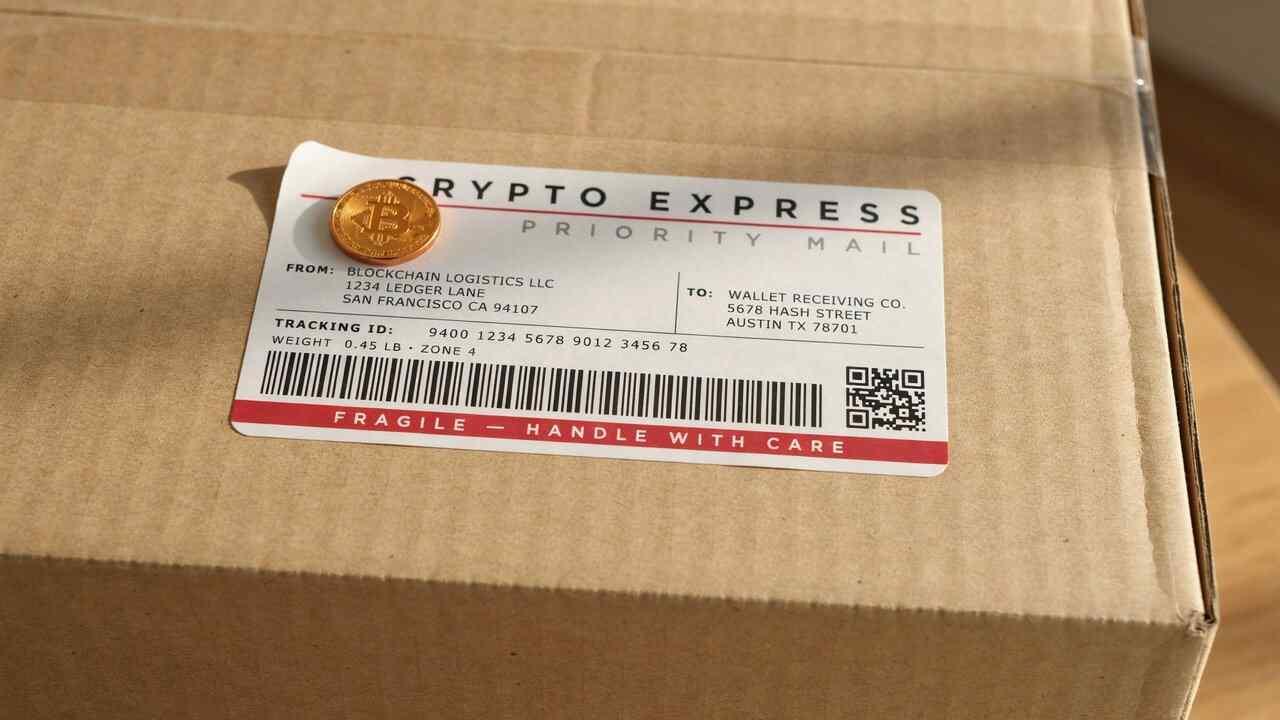
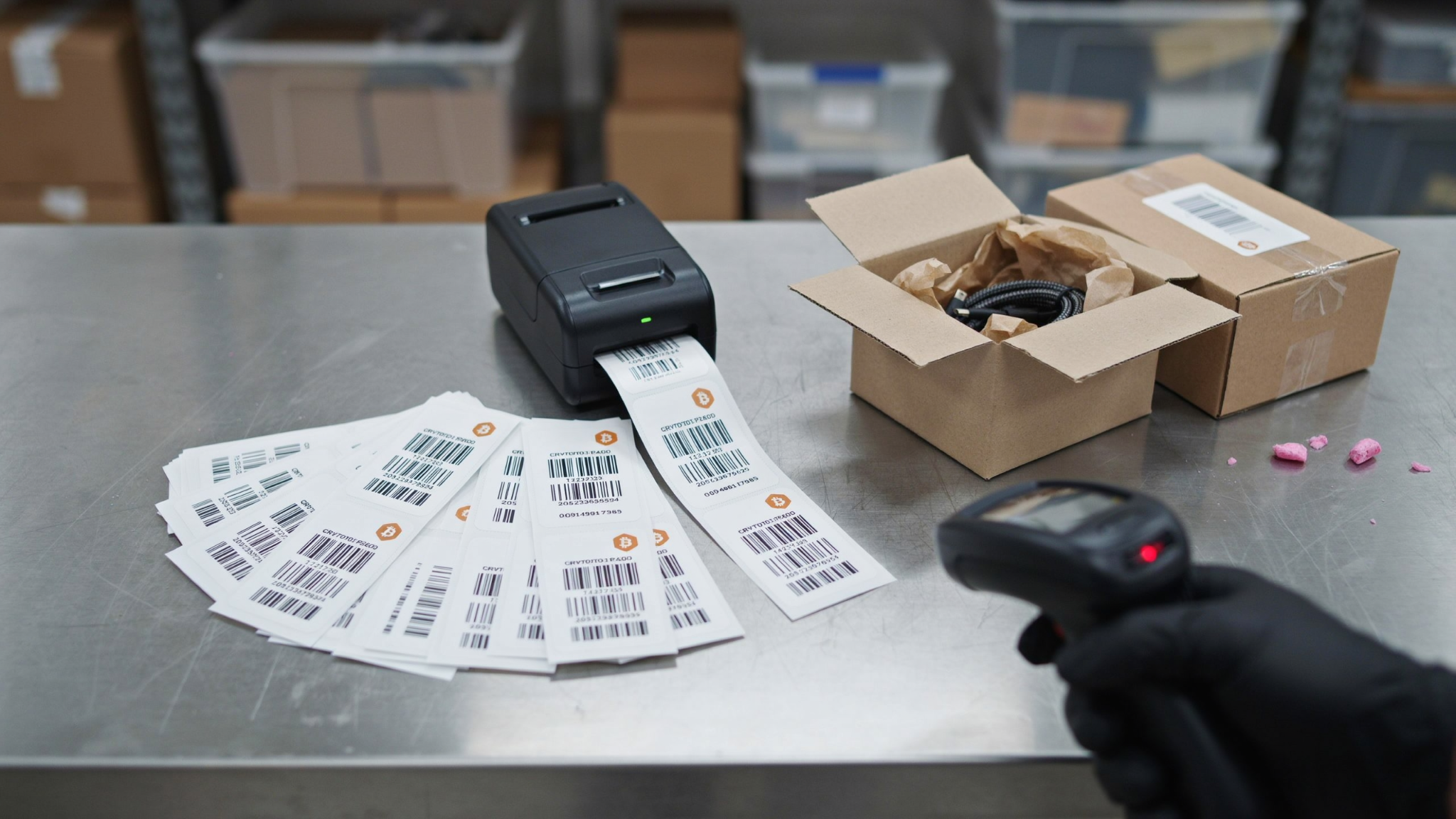
A USPS shipping label is not just a sticker with an address. It carries a barcode, often called an Intelligent Mail package barcode, that ties the package to a tracking record and confirms that postage was paid. When a mail carrier or a processing facility scans that barcode, USPS updates the tracking status you see online.
A label bought with bitcoin is the same kind of object. Once you download and print it, nothing distinguishes it as having been paid for in crypto. What matters is that the postage was legitimately purchased and is valid in the USPS system. If the postage is later voided, the barcode may stop working, and the parcel can be delayed, returned, or held.
That is why the source of the label matters more than the payment method. A reputable reseller buys genuine postage at valid rates. A disreputable one might sell labels that get cancelled after the fact.
Step by Step: Buying a USPS Label with Bitcoin
Although each service has its own interface, the general sequence looks similar.
Gather your package details. Weigh the parcel on a reliable scale, and measure its length, width, and height. Accuracy matters, because USPS can adjust postage after the fact if a label was bought for the wrong weight or size.
Select the service. Choose among options like Ground Advantage, Priority Mail, or Priority Mail Express. The right choice depends on speed, size, and budget.
Enter addresses. Add the sender and recipient details. Confirm the recipient address using a validation tool, since a typo can mean a returned or lost parcel.
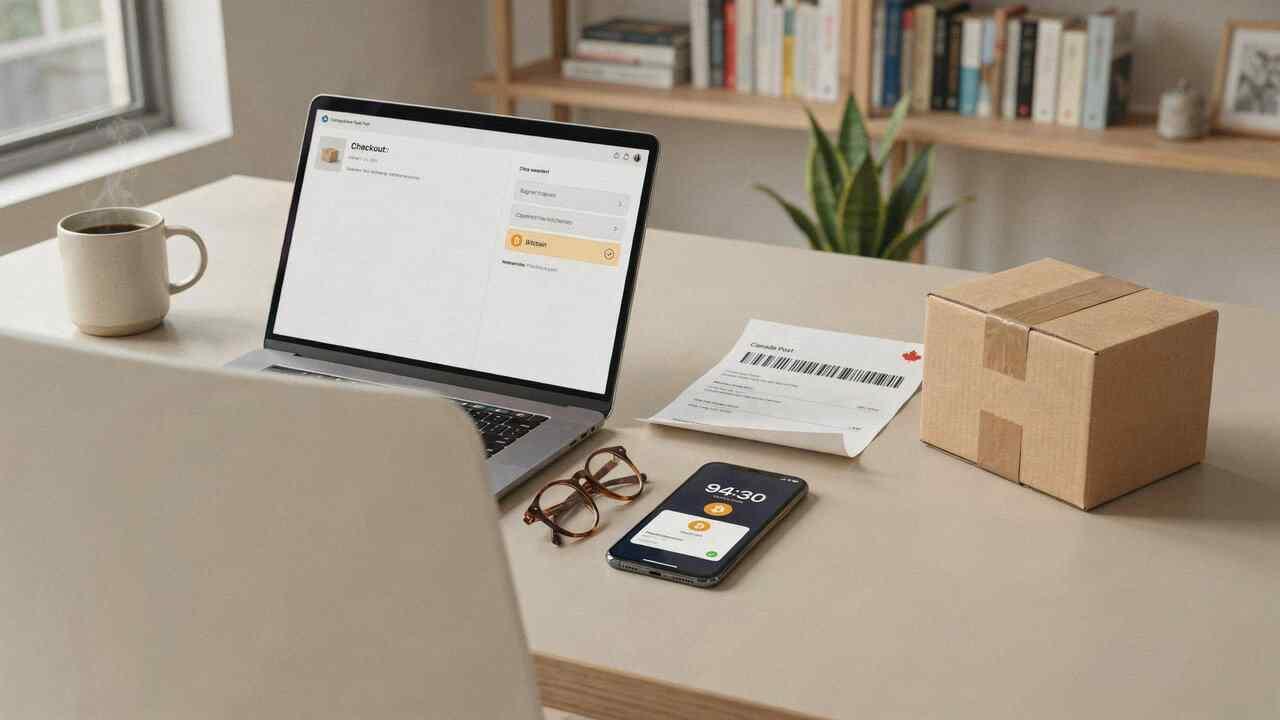
Review the quote. The seller shows the postage price in dollars, plus its own fee, then converts the total to the equivalent amount of bitcoin or another supported coin.
Send the payment. Copy the wallet address or scan the QR code, and send the exact amount before the quote expires. Overpayments and underpayments are common sources of support tickets, so double-check the figure.
Wait for confirmation. Depending on the network, the payment may take minutes to confirm. Lightning payments, where offered, are much faster.
Download and print. Once the order is marked paid, download the label, print it clearly, and secure it to the package. Cover or remove old barcodes if you are reusing a box.
Hand off the parcel. Drop it at a Post Office, give it to a letter carrier, or schedule a pickup through USPS. Some small labelled packages may go in a collection box, but rules depend on weight and service, so check current USPS guidance.
Which USPS Services Can You Expect to Buy?
Resellers vary, but these are the services most commonly available.
USPS Ground Advantage. Introduced in 2023, this service consolidated several older ground products, including First-Class Package Service and Retail Ground. It handles packages up to 70 pounds, is typically the budget option, and is popular among e-commerce sellers.
Priority Mail. A faster service, generally delivering in one to three business days, with flat-rate boxes as well as weight-based pricing. It includes tracking and some built-in insurance.
Priority Mail Express. The fastest domestic option, with delivery commitments including weekends and holidays in many locations.
Media Mail. A low-cost option restricted to specific contents such as books, printed educational materials, and certain recorded media. Using it for ineligible items can lead to penalties, so read the eligibility rules.
First-Class Mail. Used for letters and large envelopes, sometimes available through resellers for lightweight items.
International services. Some providers also sell labels for First-Class Package International Service, Priority Mail International, or Priority Mail Express International. These need customs forms, and destination countries have their own rules about what may be sent.
Before ordering, confirm that the seller supports your exact service. Many crypto label sellers concentrate on a few popular ones, such as Ground Advantage and Priority Mail, rather than the full USPS catalogue.
How Pricing Works
USPS calculates domestic parcel prices using several factors: the weight of the package, its dimensions, the shipping distance measured in zones, and the service class. Zones range from local delivery to cross-country and beyond. Larger packages are subject to dimensional weight calculations. In general, when a package exceeds one cubic foot, its size can influence the price as much as or more than its actual weight.
Retail prices are the highest. Commercial pricing, available through certain shipping platforms and commercial accounts, is lower. Some crypto label sellers use those commercial rates, which is why their labels can be cheaper than the counter price. Others may add a service fee that cancels out the savings.
When you evaluate a quote, compare it to the retail price on USPS.com and, if possible, to the commercial price offered by a card-based shipping platform. Then add the network fee for your crypto transaction. A fair comparison looks at the total cost in dollars, not just the label price.
Why Some Shippers Choose Crypto USPS Labels
There are several practical reasons people explore this route.
Keeping funds in crypto. Sellers who accept bitcoin from customers may prefer to use the same funds for shipping rather than converting to dollars and paying transaction costs twice.
Payment flexibility. People without a credit card, or with cards that decline online purchases, can still buy shipping.
Privacy preferences. Paying in crypto avoids sharing card details with a small third-party vendor, although shipping addresses are still required.
Business separation. Some operators like to keep crypto-based business activity separate from personal bank accounts.
None of these is a universal advantage, and each has to be weighed against fees, convenience, and risk.
Risks and What to Check Before You Buy
Buying shipping labels from an independent reseller carries risks that you would not face on USPS.com.
Irreversible payments. Crypto transactions generally cannot be reversed. If a seller disappears or refuses a refund, you have limited recourse.
Voided labels. If a reseller buys postage using a compromised payment method or violates USPS rules, the labels can be cancelled. Your package might then be returned to sender or held for postage due.
Too-good-to-be-true pricing. If a quote is dramatically lower than the lowest commercial rate you can find, ask why. Sustainable resellers cannot sell far below their own cost.
Refund policies. USPS and its authorized platforms typically allow refunds for unused labels within a limited window, and the process often runs through the platform that sold the label. Ask how a crypto seller handles refunds, how long you have to request one, and whether refunds are paid in crypto or as credit.
Data handling. The seller will know your recipients' addresses. Read the privacy policy and consider what information you are comfortable sharing.
Legality and compliance. Shipping rules apply regardless of how you pay. Prohibited and restricted items, such as certain batteries, liquids, and regulated goods, must follow USPS mailing standards. No payment method changes what is mailable.
A practical safeguard is to begin with a low-value test label, check that it scans and tracks properly, and only then scale up.
Tax and Bookkeeping Considerations
In the United States, the IRS treats cryptocurrency as property. When you spend crypto, you may realize a capital gain or loss based on the difference between your cost basis and the coin's fair market value at the time of the transaction. If the bitcoin you use for a label has risen in value since you acquired it, that payment could create a taxable gain, even though the amount is small.
Businesses generally record shipping as an expense at the fair market value of the crypto spent. Keep a record for each purchase that includes the date, the coin amount, the dollar value, and the reseller's receipt. Software that tracks crypto cost basis can save time when you have many small transactions. Because tax treatment depends on your situation, an accountant familiar with digital assets can give tailored guidance.
Conclusion
If you want to buy USPS labels with bitcoin, the route is indirect but workable. USPS itself does not process crypto payments, so you go through an independent seller that buys postage and accepts digital currency from you. The label you print is a standard USPS label, and it works as long as the postage behind it is genuine.
The decision comes down to trade-offs. Crypto USPS labels can suit sellers who already hold digital assets, who value payment flexibility, or who prefer not to share card details. In exchange, you accept irreversible payments, variable provider quality, network fees, and extra bookkeeping. Compare the total price against USPS's own rates, read the refund terms, test with one label, and keep clean records. Done carefully, crypto can be a sensible extra payment option in your USPS shipping toolkit.
Frequently Asked Questions
Can I ship without a printer?
USPS has offered a QR-code option in which a clerk prints the label at a Post Office counter. Availability depends on the service and on whether your seller supports it.
What is a postage adjustment?
If USPS scans a package and finds its weight or size differs from what you entered, it can bill the difference. Some resellers pass these charges on, so measure accurately.
Can I ship to PO Boxes and military addresses?
USPS can deliver many parcels to PO Boxes, which private carriers often cannot. APO, FPO, and DPO addresses generally use domestic rates but require a customs form.
How long is a purchased label valid?
Validity windows vary by service and seller, and some last only days or weeks. The label or receipt usually states the last day to mail it.
Does insurance come included?
Priority Mail and Priority Mail Express have historically included limited coverage, often $100, while other services may need extra insurance. Check current terms, and photograph valuable items before sealing.
How does pickup work with prepaid labels?
You can typically schedule a Package Pickup on USPS.com by entering the address and package details. Eligibility varies by service, so confirm before counting on it.
Why does tracking say label created for days?
That status means USPS has the postage record but has not scanned the parcel yet. It is normal until the first physical scan at drop-off or pickup.
What happens if the package cannot be delivered?
USPS usually returns it to the return address, and some services may charge return postage. Always include an accurate return address and a phone number or email for the recipient.