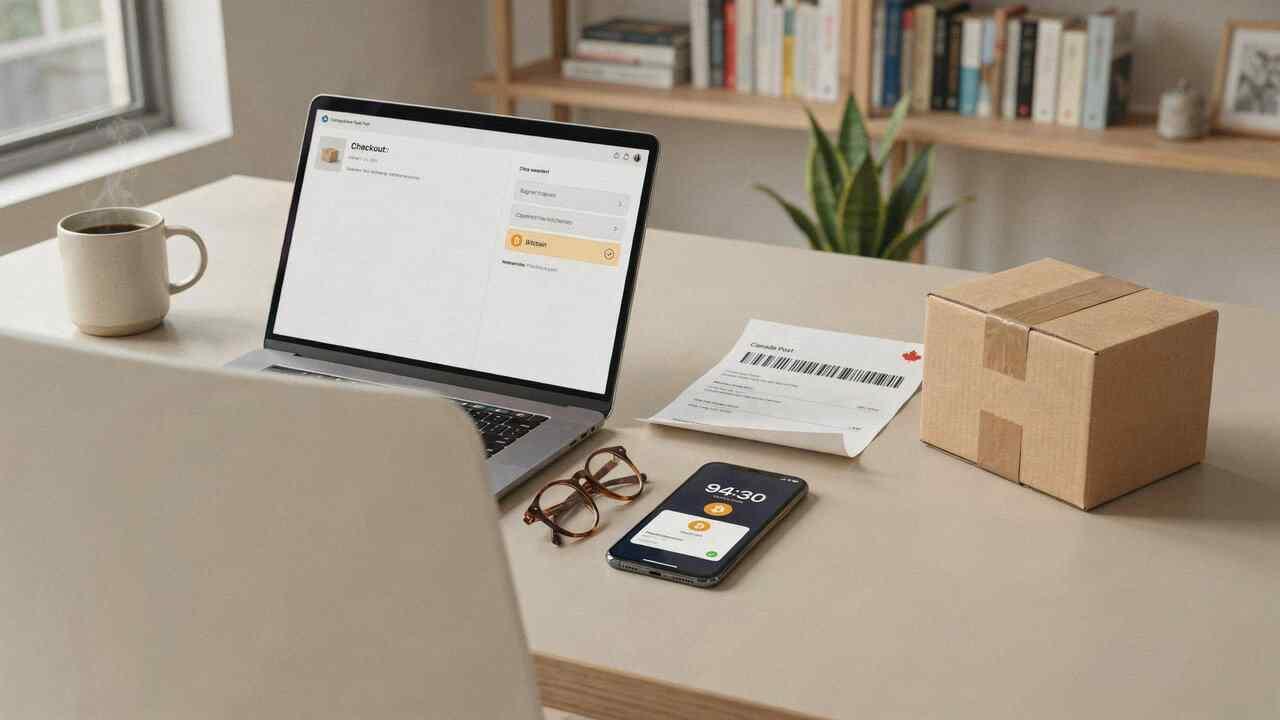

Most people who hold bitcoin eventually run into the same small frustration. You can pay for a laptop, a plane ticket, or a VPN subscription with crypto, but when it is time to mail a package, the post office and the big carriers want a card or a bank transfer. If you sell things online, that friction repeats every day. So it is fair to ask: can you buy postage with bitcoin, and if so, how does it actually work?
The short answer is yes, but not directly. Carriers such as the United States Postal Service, Canada Post, UPS, FedEx and DHL run their own payment systems, and those systems are built around conventional money. What has emerged instead is a small category of third-party services that sell shipping labels and accept cryptocurrency as payment. This guide explains how bitcoin postage works behind the scenes, what you are really buying when you pay for a label with crypto, what it costs, where the risks are, and how to decide whether it makes sense for you.
What "Bitcoin Postage" Actually Means
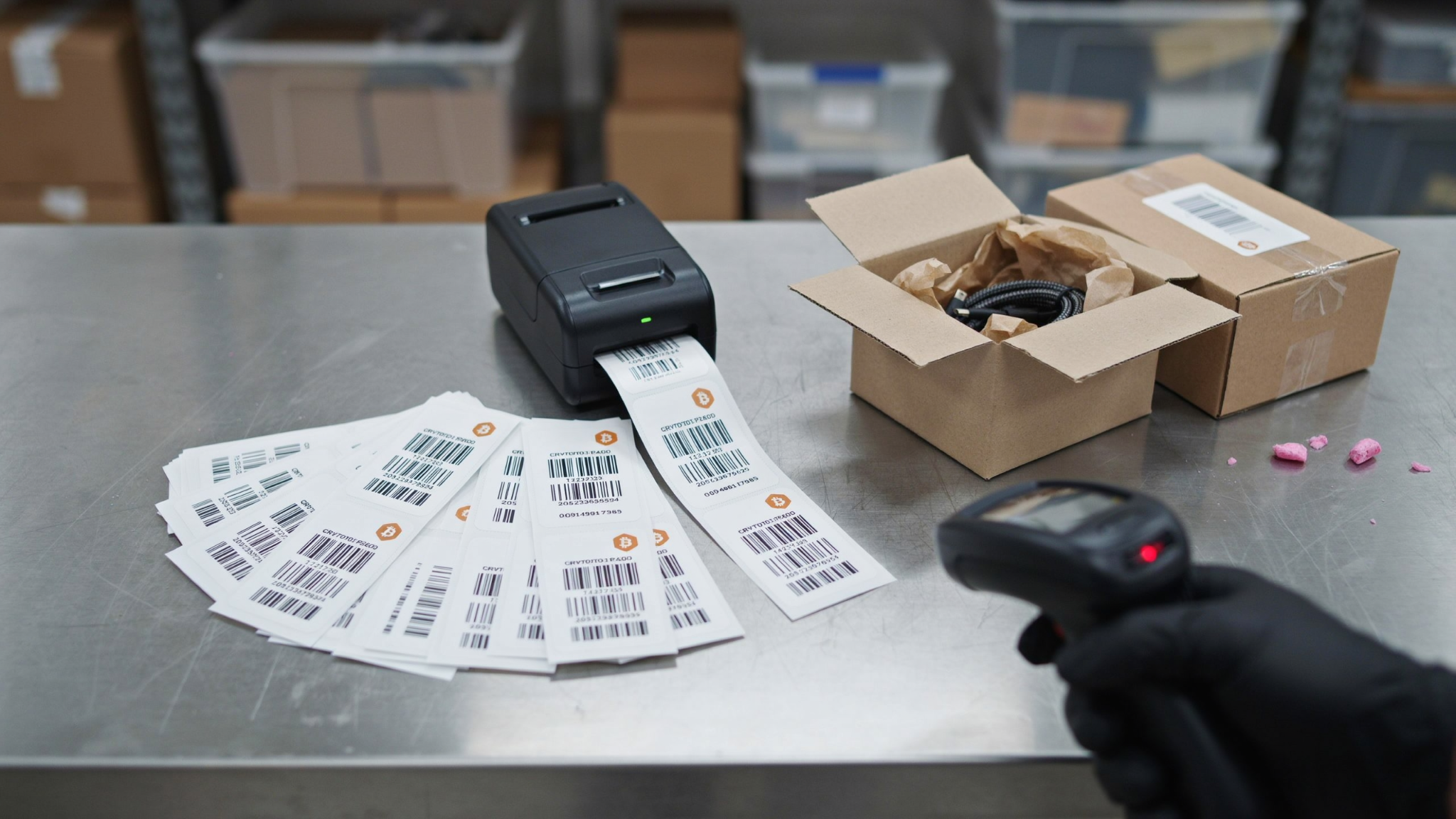
Postage is simply proof that delivery has been paid for. In the era of paper stamps, that proof was a small printed picture stuck to an envelope. Today it is usually a barcode printed on a shipping label. The barcode identifies the shipment, tells the carrier the postage has been paid, and lets tracking events attach to the parcel as it moves through the network.
When a service advertises bitcoin postage, it is selling that printable label. It is not selling a special crypto stamp, and the carrier is not handling bitcoin. The service takes your payment in cryptocurrency, buys the postage from the carrier using its own account and conventional money, and gives you the finished label as a PDF or image file. You print it, attach it to your package, and drop it off or schedule a pickup.
You will see the idea described in several ways: bitcoin postage, crypto postage, bitcoin shipping labels, crypto shipping labels, or btc postage. The wording differs, but the arrangement is the same. Some services accept only bitcoin. Others also take coins such as Litecoin, Ethereum, or Dogecoin, and many accept stablecoins that track the dollar, which helps avoid price swings.
Why Carriers Don't Accept Crypto Directly
If you have ever looked for a "pay with bitcoin" option on a carrier's website, you probably came up empty. There are a few reasons for that.
Large carriers operate under strict financial, accounting, and regulatory frameworks. Their billing systems are designed around bank cards, bank transfers, invoices, and prepaid accounts. Accepting cryptocurrency would mean dealing with price volatility, tax reporting, custody, and compliance questions that most of them have not chosen to take on. As of this writing, the major carriers' own online shipping tools do not list crypto as a payment method, though policies can change, so it is worth checking each carrier's current payment page.
That gap is exactly what third-party sellers fill. They sit between you and the carrier, converting your crypto payment into the conventional payment the carrier expects. It is a bit like buying a gift card with cryptocurrency: the merchant that ultimately gets paid never touches your coins.
How Buying Postage with Bitcoin Works, Step by Step
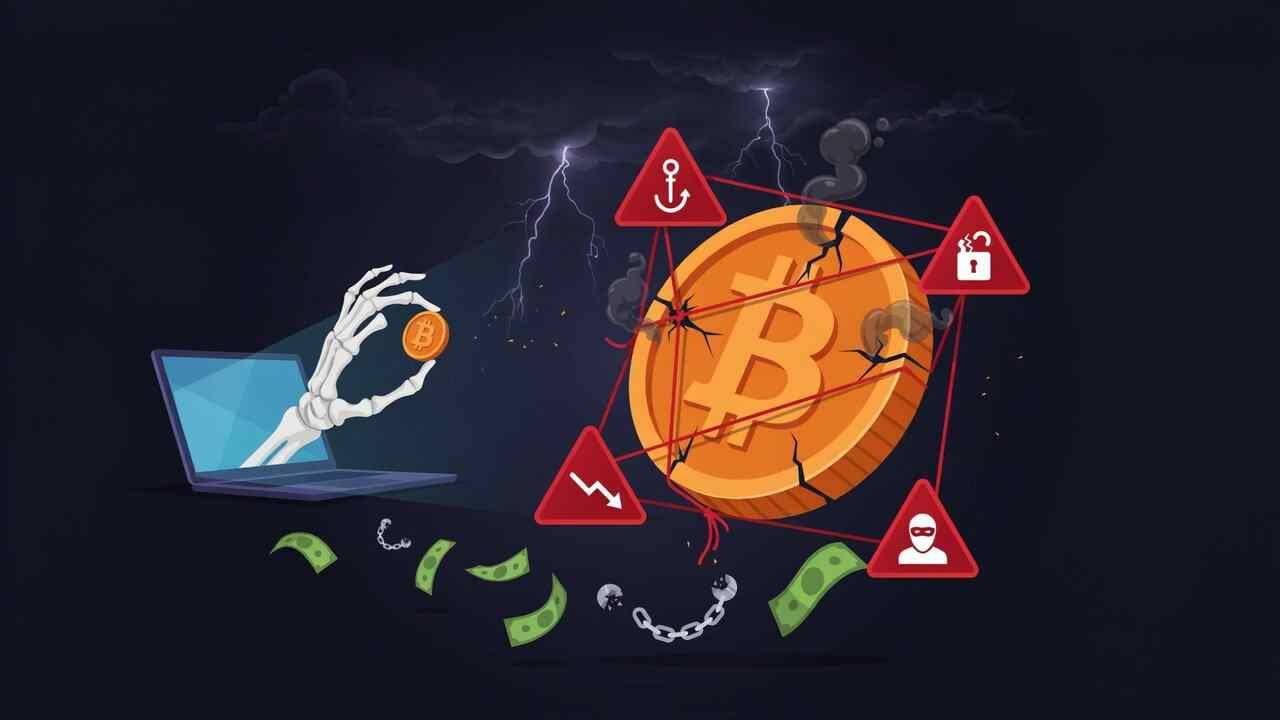
The details vary by provider, but the flow usually looks like this.
1. Choose a service and create an account, or check out as a guest. Some providers require an email address and a login so you can keep a history of your labels. Others let you order without an account. Review the provider's terms, refund policy, and contact options before you send any money.
2. Enter the shipment details. You provide the sender and recipient addresses, the package weight and dimensions, and the service level you want, such as ground delivery or express. Many services also ask what the package contains when it is going abroad.
3. Get a quote. The service calculates the postage price, usually shown in a familiar currency like US dollars or Canadian dollars, along with any service fee. Then it converts that total into the amount of bitcoin due at the current exchange rate.
4. Pay from your wallet. You are shown a bitcoin address or a QR code, plus the exact amount and a time window, often somewhere between fifteen minutes and an hour. You send the payment from your wallet. If the provider supports the Lightning Network, the payment settles in seconds. On the main bitcoin network it typically needs one or more confirmations first.
5. Wait for confirmation. The provider watches the blockchain for your transaction. Once it has enough confirmations, it marks the order as paid. This can take from a few minutes to an hour or more, depending on network congestion and the fee you attached to the transaction.
6. Download the label. You receive the label file, a tracking number, and sometimes an email receipt. Print it on a standard printer or a 4x6 thermal label printer, attach it securely, and hand the parcel to the carrier.
That is the whole process. In practice, the trickiest parts are paying the exact amount within the time window and making sure the label details are correct before you pay, because corrections after printing can be difficult or impossible.
What You Can Actually Buy
Depending on the provider, crypto-paid labels may cover:
- Domestic parcel services in the United States or Canada, such as ground or economy delivery, priority-style services, and express delivery.
- International services, including cross-border parcels that need customs forms.
- Multiple carriers, such as USPS, Canada Post, UPS, FedEx, or DHL, or only one or two of them.
- Extras like signature confirmation, insurance, or return labels.
Coverage differs widely. A provider that handles domestic US labels may not offer Canadian or international ones, and the reverse is also true. Before you commit, check that the exact carrier, service level, and destination you need are supported, and whether the package size and weight limits match your shipment.
It is also worth knowing what is generally not on offer. You cannot usually buy a roll of physical stamps with bitcoin, and you cannot pay with crypto at a retail post office counter. Bitcoin postage is a digital, print-at-home product.
What It Costs: Fees, Rates, and Price Movement
The total cost of a crypto-paid label has several parts.
The postage itself. Carriers set their rates by weight, size, distance, and service level. Businesses that ship in volume often get commercial or discounted rates. Some resellers pass a portion of those discounts along, which can make a label cheaper than the retail counter price. Others simply add a markup. Compare a provider's quote against the carrier's own published price for the same shipment.
The service fee. Providers earn their margin from a flat fee, a percentage, or a markup on postage. A fee that looks small on a single label can add up over hundreds of shipments, so read the pricing page carefully.
Network fees. Sending bitcoin costs a transaction fee paid to the network, not to the provider. On the main chain this fee moves with congestion. For a package that costs a few dollars to ship, a high network fee can eat a meaningful share of any savings. Lightning payments and stablecoin transfers on low-fee networks can be much cheaper for small purchases.
Price movement. Because a quote is locked in for a short window, you are usually protected from swings between quoting and paying. The larger exposure is the value of the coins you hold. If you pay for a label with bitcoin that later doubles in value, you effectively spent more than the label's dollar price. Some people prefer to use a stablecoin, or to set aside a fixed amount of crypto for business expenses, to keep this simple.
Privacy: What It Does and Does Not Do
Privacy is one of the most common reasons people look at bitcoin shipping labels. It helps to be precise about what is and is not protected.
Paying in bitcoin can reduce how much financial information you share with the seller. You do not hand over a card number, a billing address, or a bank account. On the other hand, bitcoin transactions are recorded on a public ledger. Addresses are pseudonymous rather than anonymous, and if a wallet is linked to your identity through an exchange account, the payment can be traced back to you. Using a fresh address for each payment and avoiding address reuse improves privacy, but it does not make it perfect.
Privacy also has limits on the shipping side. The package still has to carry the information the carrier needs to deliver it, and carriers and customs authorities have their own requirements about sender and recipient details and declared contents. A crypto payment does not exempt anyone from those rules. Anything that sounds like "no rules apply" should be treated as a warning sign, not a feature.
Finally, the provider still handles your addresses and shipment details. Read its privacy policy to see what it collects and how long it keeps that data.
Risks and Red Flags to Check Before You Pay
Because this is a niche market, quality varies. These checks can help you avoid problems.
- Reputation. Look for independent reviews, community discussions, and a history of operating over time. A polished website alone proves nothing.
- Clear terms. A trustworthy provider explains refunds, lost or damaged parcels, voided labels, and what happens if your payment arrives late or comes up short.
- Realistic pricing. Prices far below the carrier's lowest published commercial rates deserve suspicion. Labels sold at unrealistic discounts are sometimes created with stolen payment methods or altered data, and the carrier can cancel them, leaving the parcel stuck or returned.
- Working support. Look for a real contact channel, and test it with a question before you buy.
- A small test first. Start with one inexpensive label before placing a large or bulk order.
- Carrier rules. Labels must be legitimately purchased. Postage bought fraudulently can be voided, and the shipper, not just the provider, may face consequences.
Cryptocurrency payments are generally irreversible. Unlike a card chargeback, if something goes wrong you rely on the provider's goodwill and written policies. That is one of the main trade-offs, and it is why testing with a small order matters.
Tax and Record Keeping
Spending cryptocurrency is treated as a taxable event in many countries. In the United States, the IRS treats crypto as property, so using it to pay for something can trigger a capital gain or loss based on the difference between what you paid for the coins and their value when you spent them. Canada's tax authority takes a similar view and treats such a payment as a disposition. If you run a business, the shipping cost is typically recorded as an expense at the fair market value of the coins on the date you paid.
Practically, this means keeping records: the date, the amount of crypto sent, its value in your local currency at that moment, and the invoice or receipt from the provider. Many people use crypto tax software or a spreadsheet for this. Rules differ by country and change over time, so consider speaking with an accountant. This article is general information, not tax advice.
Conclusion
You can buy postage with bitcoin, just not from the carrier itself. The practical route runs through third-party sellers that accept crypto, purchase postage on your behalf, and hand you a printable label. That arrangement can be genuinely useful for online sellers who hold crypto, for people who want to keep card details private, and for anyone who lacks easy access to conventional payment methods.
It also comes with trade-offs: irreversible payments, network fees, uneven provider quality, and tax record keeping. The best approach is a careful one. Check what the provider supports, compare the total price against the carrier's own rate, read the refund terms, and start with a single low-cost label before scaling up. Treat crypto as one more payment option rather than a shortcut around shipping rules, and it can fit neatly into how you send packages.
Frequently Asked Questions
Do I need a special wallet to pay for bitcoin postage?
No. Any wallet that can send to an address or scan a QR code works. Exchange withdrawals may carry minimums or fees, so check them before paying for a small label.
What happens if I send too little or too much?
It depends on the provider. Underpayments often leave the order pending until you top up, and overpayments may be credited or refunded. Keep your transaction ID handy for support.
How many confirmations do providers usually want?
Small orders often need one to three confirmations, and some providers release labels after the transaction first appears on the network. Ask about the rule before paying so you can plan around it.
Can I pay over the Lightning Network?
Only where the provider supports it. You need a Lightning-capable wallet, and invoices typically expire within minutes, so pay soon after the quote appears.
Does paying in crypto slow down delivery?
No. Delivery speed depends only on the carrier service you chose. Any delay happens before the label exists, while the payment confirms.
What if I send funds on the wrong network?
Stablecoins such as USDT exist on several networks, and sending on the wrong one can lose funds permanently. Match the network shown at checkout exactly, and send a tiny test first if unsure.
Do shipping labels expire?
Often yes. Many carriers expect a label to be used within a limited window after it is created, so print and ship promptly rather than stockpiling labels.
Can I ship without a printer?
Some carriers offer QR-code or counter-printing options for drop-off, but availability varies by carrier and service. Ask the provider before relying on it.