You need to ship a package today. The post office line is long, your card reader is acting up, and you'd rather not leave the house.
Waiting in line burns your afternoon. Paying full retail rate burns your wallet. And if you already hold bitcoin, converting it to cash just to buy a stamp feels backward.
Here's the fix: a crypto postage app lets you buy postage on phone with bitcoin , print the label from your phone, and skip the counter completely. This guide walks you through exactly how it works, step by step.
Why Mailing a Package Still Costs More Than It Should
Retail postage rates are the sticker price the post office charges walk-in customers. Online postage services get commercial rates instead — the same discount big shippers negotiate, passed on to you.
That gap is where the savings come from. It's not a marketing trick. It's the difference between retail pricing and commercial pricing, and any online postage service can offer it, not just crypto-based ones.
Bitcoin postage adds a second layer of value on top of that discount: you skip currency conversion fees, bank holds, and the delay of linking a card. You pay directly from a wallet you already control.
What Bitcoin Postage Actually Means
Bitcoin postage is a shipping label you buy using BTC (or another cryptocurrency) instead of a credit card. The label works exactly the same as one bought with cash — same tracking number, same carrier, same delivery guarantee.
The only difference is the payment rail. Instead of routing through a card network, your payment settles on the blockchain. The service converts your crypto to the label price at checkout, generates the label, and you print it.
This matters for three groups of people: crypto holders who want to spend BTC directly, sellers who ship internationally and want to dodge currency conversion fees, and anyone who values not handing a bank their shipping habits.
How to Buy Postage on Phone With Bitcoin (Step-by-Step)
This is the part competitor sites skip. Here's the actual process, start to finish.
Step 1: Open a Crypto Postage App
Go to a bitcoin shipping labels site on your phone's browser — no app store download needed for most services. Look for one that lists BTC, and ideally other coins like Litecoin or Monero, as accepted payment.
Step 2: Enter Your Package Details
Type in the "from" and "to" addresses, then the package weight and dimensions. Most services let you paste a full address and auto-fill the fields, which saves time on mobile.
Step 3: Pick Your Carrier and Service Level
Select USPS, UPS, FedEx, DHL, or Canada Post. Choose the speed you need — Ground Advantage for slower, cheaper delivery, or Priority/Express if the package is time-sensitive.
Step 4: Compare Rates on Screen
The app shows live rates across carriers instantly. This step is where the actual savings show up — you're seeing commercial rates side by side, not one fixed retail number.
Step 5: Pay With Bitcoin
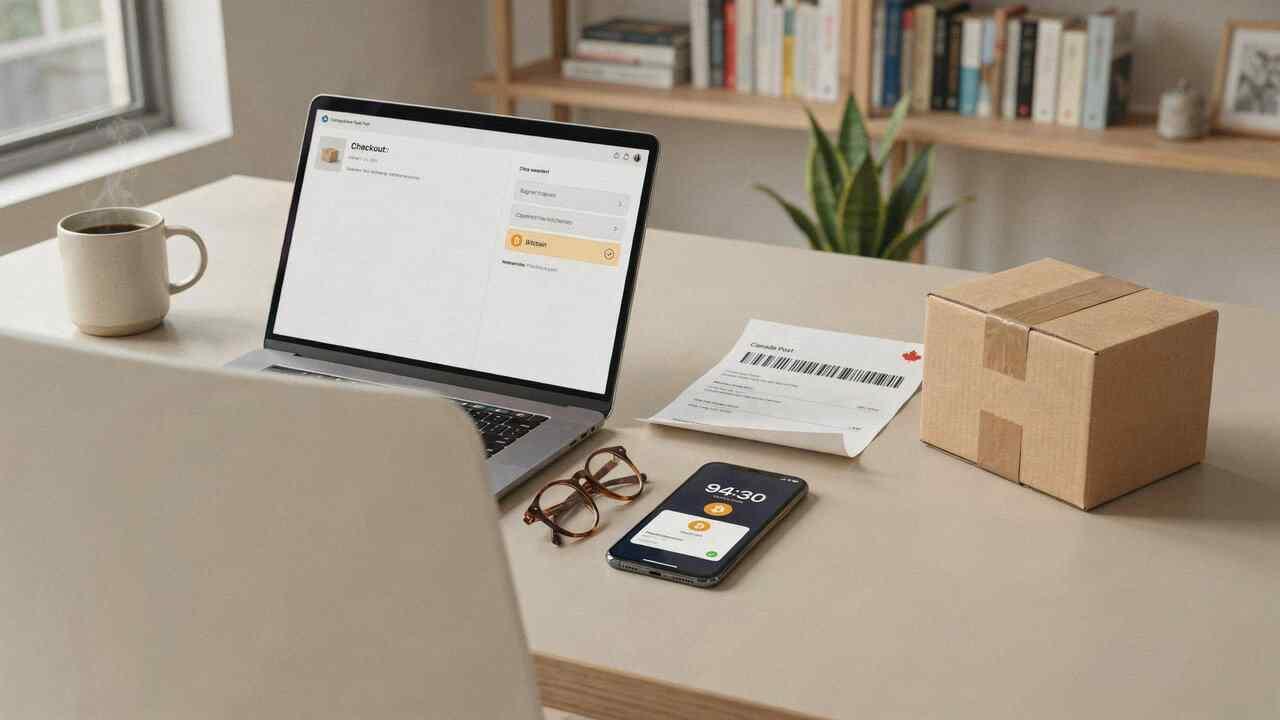
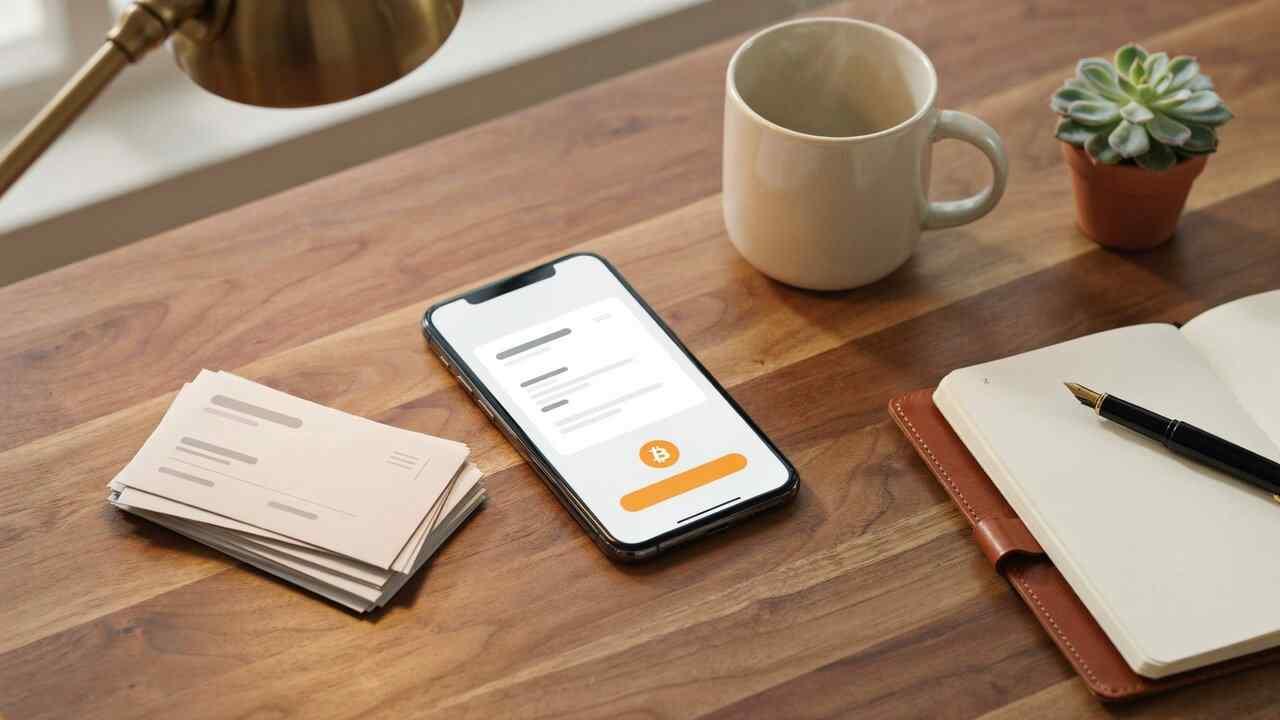
Tap "pay with crypto," and the app generates a payment address or QR code. Open your wallet app, scan it, confirm the amount, and send. Most services lock your quote for 10-15 minutes so a price swing mid-transaction doesn't cost you extra.
Step 6: Print or Save Your Label
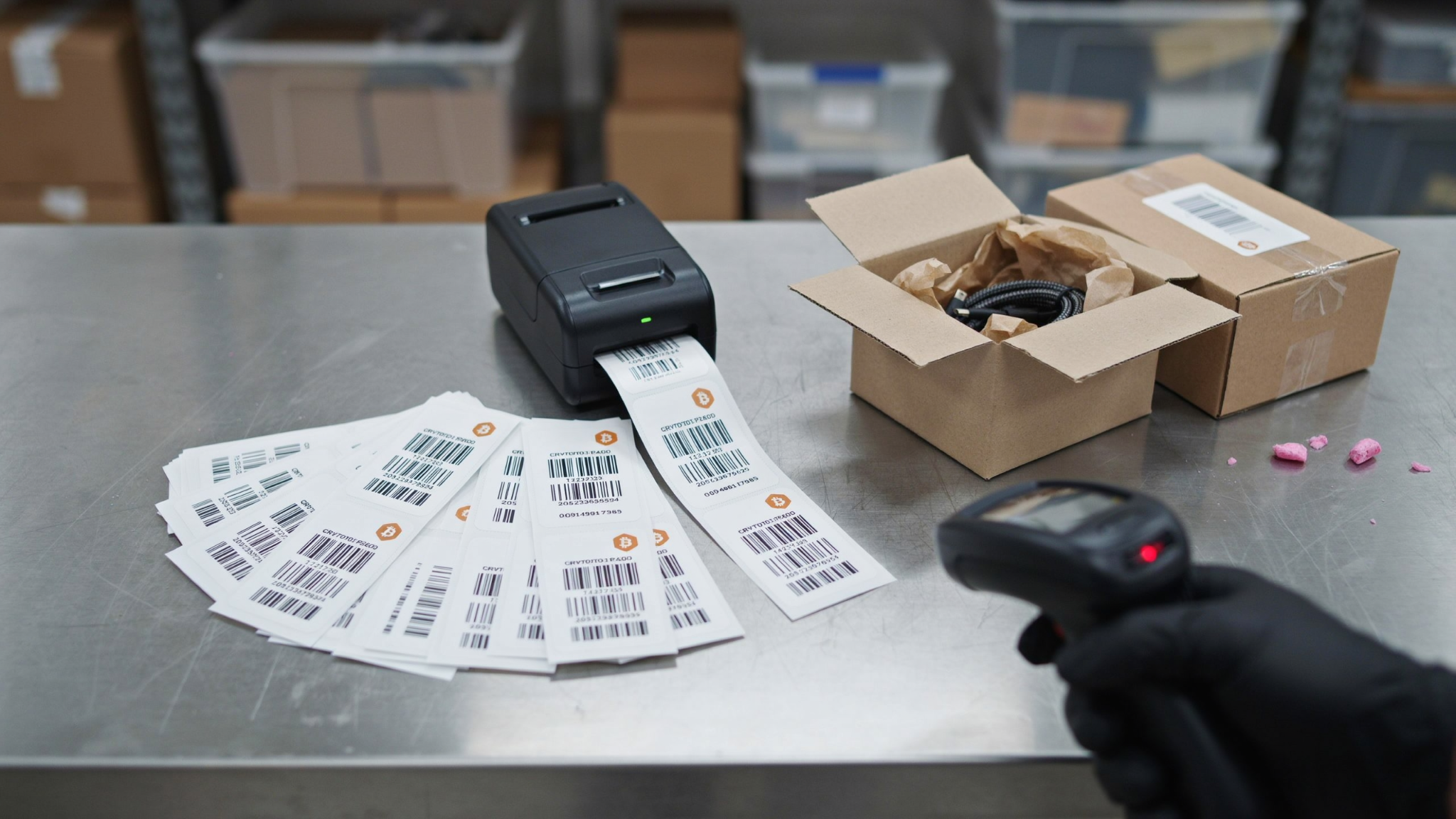
Once the payment confirms on-chain, your label appears as a PDF. Print it at home, or save it to your phone and print it later at a shipping store or library.
The entire process, once you've done it once, takes under five minutes.
Which Carriers You Can Pay for With Bitcoin
Most crypto postage app options support the major U.S. and international carriers:
- USPS — the most common choice for domestic Priority, Express, Ground Advantage, and Media Mail
- UPS — typically requires linking an account for the deepest discounts
- FedEx — same account requirement, plus stricter battery-shipping rules
- Canada Post — for shipments to or from Canada
- DHL — for international commercial shipments
Not every crypto shipping app supports every carrier equally. Check the carrier list before you commit if you need a specific one.
Some services brand themselves narrowly around btc shipping only, while others build broader crypto shipping labels support across five or six coins. If you plan to buy shipping labels online regularly, pick a service — like CryptoPostage — that covers the carriers and coins you actually use, not just the one shown on the homepage.
Bitcoin Postage vs. Other Payment Methods: The Real Comparison
Here's an honest breakdown of what changes when you pay with crypto instead of a card.
What stays the same: the label price, the delivery speed, the tracking, and the carrier's service guarantee. Bitcoin doesn't make USPS deliver faster.
What changes: how you pay. No card processing fees passed to you, no currency conversion charge if you're paying from a non-USD balance, and no bank flagging a shipping charge as unusual activity.
What you give up: buyer protection features some credit cards offer, like automatic purchase disputes. Crypto payments are final once confirmed.
If you're weighing the cheapest way to ship a package, the payment method matters less than the carrier and service level you pick. Crypto's advantage is convenience and control, not a hidden discount card payments don't get.
Cheap Postage Online: What Actually Drives the Discount
Searchers look for cheap postage online and discount shipping labels assuming there's a secret code somewhere. There isn't. The discount comes from the rate class, not the payment method.
Every online postage service — crypto-based or not — buys access to commercial USPS, UPS, and FedEx rates through a licensed reseller agreement. That access is what makes a shipping label online cheaper than walking up to a counter and paying retail.
So when you compare a bitcoin postage app to a card-based one, the label price is usually close to identical. Some brands market themselves around one coin — you'll see names like btcpostage or btcpostage com built entirely around BTC — while others, like bitcoinpostage-style services, expand to Litecoin, Monero, and Bitcoin Cash. The coin selection changes; the underlying discount math doesn't.
If you're learning how to buy postage online for the first time, treat crypto as a payment preference layered on top of a normal discount shipping service — not a separate cheaper category of postage. Some people still search "bit coin postage" as two words out of habit from older crypto sites; the process is identical either way.
Is It Safe to Buy Shipping Labels With Bitcoin?
Yes, with the same precautions you'd use for any online crypto payment. Here's what to actually check before you send funds.
Confirm the payment address matches what the app displays — never copy an address from anywhere else. Wallet clipboard malware exists, so double-check the first and last few characters before sending.
Use a site that doesn't require an account for basic labels. Fewer accounts means less personal data sitting on a server somewhere. Many bitcoin postage services let you buy a single label with zero sign-up.
Check for HTTPS and a real support contact. A working email or contact form, visible terms of service, and a refund policy are the minimum bar for trusting a checkout page with your payment.
Understand that crypto payments don't reverse. Once your transaction confirms on the blockchain, it's final. Double-check every address field before you hit send.
None of this makes bitcoin postage riskier than card payments — it just shifts where your caution needs to go.
International Shipping With Bitcoin: What Changes
International shipping with bitcoin follows the same core process, with one extra step: customs forms.
When you ship outside your home country, you'll fill out a customs declaration alongside your label. This includes the contents type (merchandise, gift, documents, sample), an itemized description, declared value, and the HS tariff number for each item.
The tariff number matters more than people expect. Get it wrong and your package can sit in customs or get hit with an incorrect duty charge. Most postage apps link to a tariff lookup tool — use it instead of guessing.
Crypto shipping has one real advantage here: no currency conversion. If you're paying in BTC, you skip the exchange rate markup your bank would otherwise apply to an international purchase, and you skip any foreign transaction fee a card might charge.
Delivery speed and customs processing time depend entirely on the destination country and carrier, not on how you paid. Bitcoin gets your label printed faster; it doesn't speed up customs.
Common Mistakes Beginners Make Buying Crypto Postage
Underestimating package weight. Carriers charge based on the higher of actual or dimensional weight. Round up, not down, or your label may not cover the actual cost and the package gets returned.
Missing the payment window. Crypto quotes lock for a limited time, usually 10-15 minutes. If your wallet transaction takes longer than that to confirm, you may need to restart the order.
Skipping address verification. A single wrong digit in a zip code can delay delivery by days. Use the address verification feature if the app offers one — it catches typos before you pay.
Forgetting hazardous materials rules. Lithium batteries, liquids, and pressurized items have carrier-specific restrictions. FedEx in particular restricts battery shipments — check before you print, not after it's already in the mail.
Not saving the payment confirmation. Keep your transaction ID and label receipt together. If a label needs a refund or reprint, you'll need both.
Websites That Accept Cryptocurrency for Shipping
Beyond dedicated postage apps, a growing number of websites that accept cryptocurrency payments now cover shipping and logistics broadly — not just postage labels, but freight brokers, package forwarding services, and some fulfillment platforms.
If you're building a habit of paying with crypto across your shipping workflow, look for a service that supports CSV bulk import for label batches, API access if you're shipping from an e-commerce store, and multiple coins beyond just BTC — Litecoin and Monero are common second options.
The core question to ask any provider: does it generate real, carrier-recognized tracking numbers, or is it a middleman reselling someone else's labels? Stick with services that show the carrier logo directly on the label and let you verify bitcoin tracking labels on the carrier's own site.
What to Look For Before You Commit to a Crypto Postage App
Not every service that lets you print shipping labels for crypto is built the same way. A few checks separate a solid crypto postage app from one that will cost you time later.
Coin flexibility matters. A platform limited to BTC only works fine if that's all you hold. If you split funds across coins, look for bitcoin shipping labels services that also take Litecoin, Bitcoin Cash, or stablecoins so you're not stuck converting first.
Bulk order support saves real time. If you ship more than a handful of packages a week, a CSV import feature turns an hour of manual entry into a five-minute upload. This is worth checking before you commit to any btc postage provider as your regular tool.
Refund and reprint policy should be visible upfront, not buried in a support ticket. Mistakes happen — wrong weight, wrong address — and a clear refund policy tells you how painful that mistake will be to fix.
Order recovery matters more than people expect. If your browser crashes mid-checkout, you want a service that lets you pull the order back up instead of starting over and risking a double payment.
Run through this checklist once, and picking between competing bitcoin labels providers takes minutes instead of guesswork.
Your Next Step
Pick a package sitting in your house right now and buy its label using crypto today. The best way to learn this process is to run it once with a real shipment, not read about it a second time.
Once you've done it, the five-minute process becomes a two-minute habit — and you'll never go back to standing in a post office line.
FAQs
Can I buy postage with Bitcoin on any phone, or do I need a specific app?
You don't need a dedicated app. Most bitcoin postage services work directly in your phone's browser, and your existing crypto wallet app handles the payment side. No app store download is required.
What happens if the Bitcoin price changes while I'm checking out?
Reputable services lock your quoted price for a set window, usually 10-15 minutes. As long as you complete payment inside that window, you pay the locked amount regardless of what BTC does afterward.
Do I need to convert Bitcoin to cash first to buy postage?
No — that's the entire point of a crypto postage app. You send BTC directly, and the service converts it to the label price on the backend. You never touch a bank.
Can I use Bitcoin for international shipping, or only domestic?
Most services support both. International orders require extra customs paperwork, but the crypto payment step works exactly the same as a domestic order.
Is buying shipping labels online with crypto legal?
Yes. Buying postage is a normal commercial transaction, and paying with cryptocurrency for legal goods and services is legal in the U.S. and most countries. The carrier doesn't care what currency funded the label — it only cares that it's paid.