Paying for a shipping label across borders often turns into a mess. Your card gets flagged for "suspicious" foreign activity, your bank adds a currency conversion fee, and the shipping site still charges more than you expected at checkout. If you ship abroad often, these small charges pile up fast and quietly eat your margin.
International shipping with Bitcoin removes most of that friction. You skip the bank, skip the currency conversion, and pay a shipping platform straight from your wallet. This guide walks through exactly how bitcoin shipping works, which customs rules still apply, and how to avoid the mistakes that trip up first-time crypto shippers.
What Is International Shipping With Bitcoin?
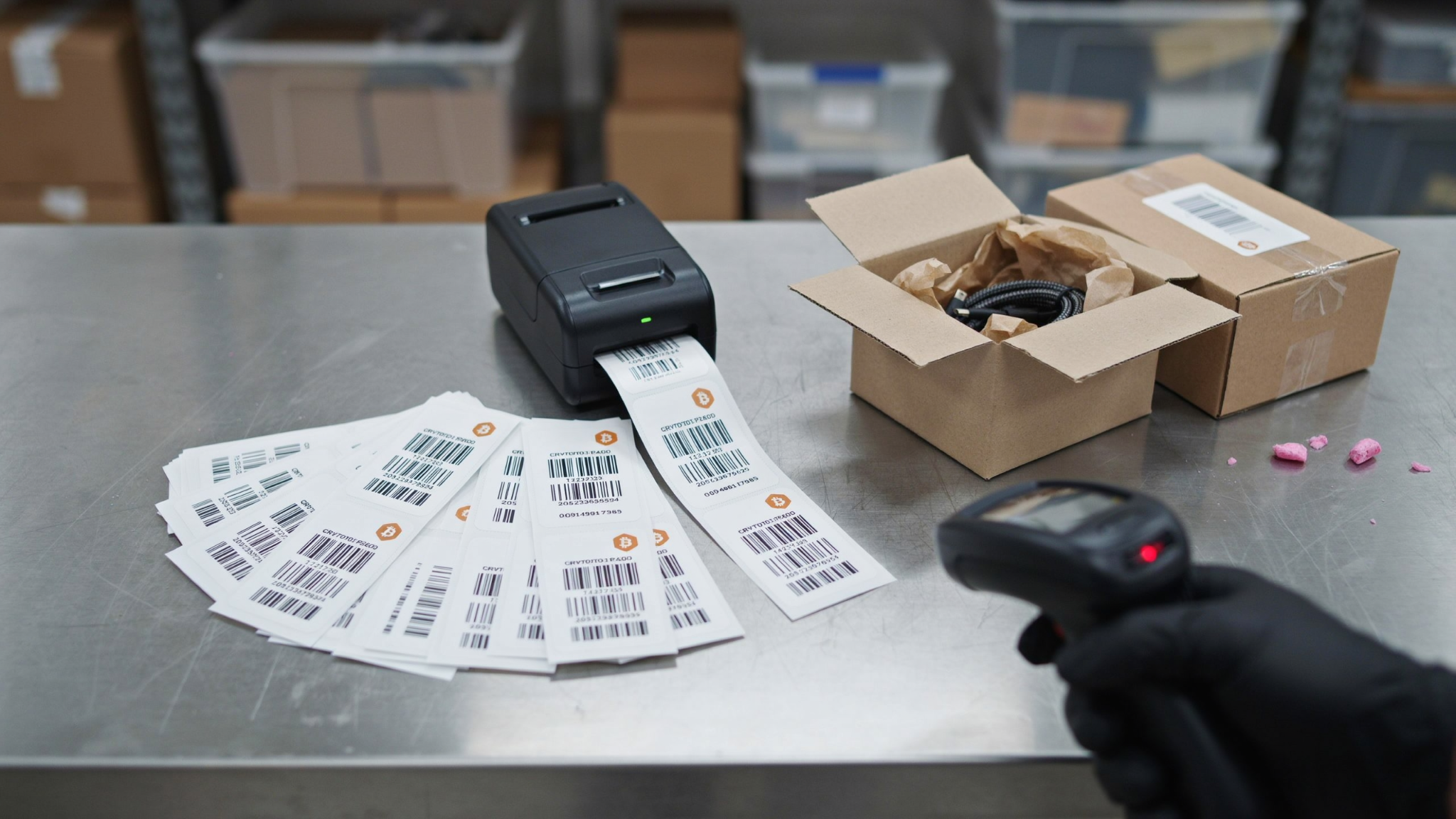
International shipping with Bitcoin means you pay for a shipping label using BTC instead of a credit card or bank transfer. A crypto shipping platform calculates your postage cost, converts it into a Bitcoin amount, and gives you a wallet address for payment. Once the network confirms your transaction, you get a printable label for USPS, UPS, FedEx, or another supported carrier.
This isn't a new delivery network. Your package still moves through the same planes, trucks, and sorting centers it always has. Bitcoin only changes how you pay for the label — the physical shipping process stays exactly the same.
Crypto shipping exists because more people hold Bitcoin than ever want to spend it directly. Instead of selling BTC on an exchange first and then loading a card, you can go straight from wallet to shipping label in one transaction.
Who Uses Bitcoin Shipping
Bitcoin shipping fits a specific set of shippers better than the average retail customer. Online sellers who already accept cryptocurrency payments from buyers use it to close the loop, spending the same crypto they earn instead of converting it twice.
Freelancers and remote workers who get paid in crypto use it for the same reason — no bank account required at any step. Collectors, resellers, and privacy-conscious senders like that they don't need to hand a card number to another website. And anyone shipping internationally on a tight budget likes that crypto shipping is often the cheapest way to ship a package once bank fees are removed from the equation.
How Bitcoin Shipping Works, Step by Step
Buying postage online with crypto follows a clear sequence. Learn it once and you can repeat it in under five minutes for every future shipment.
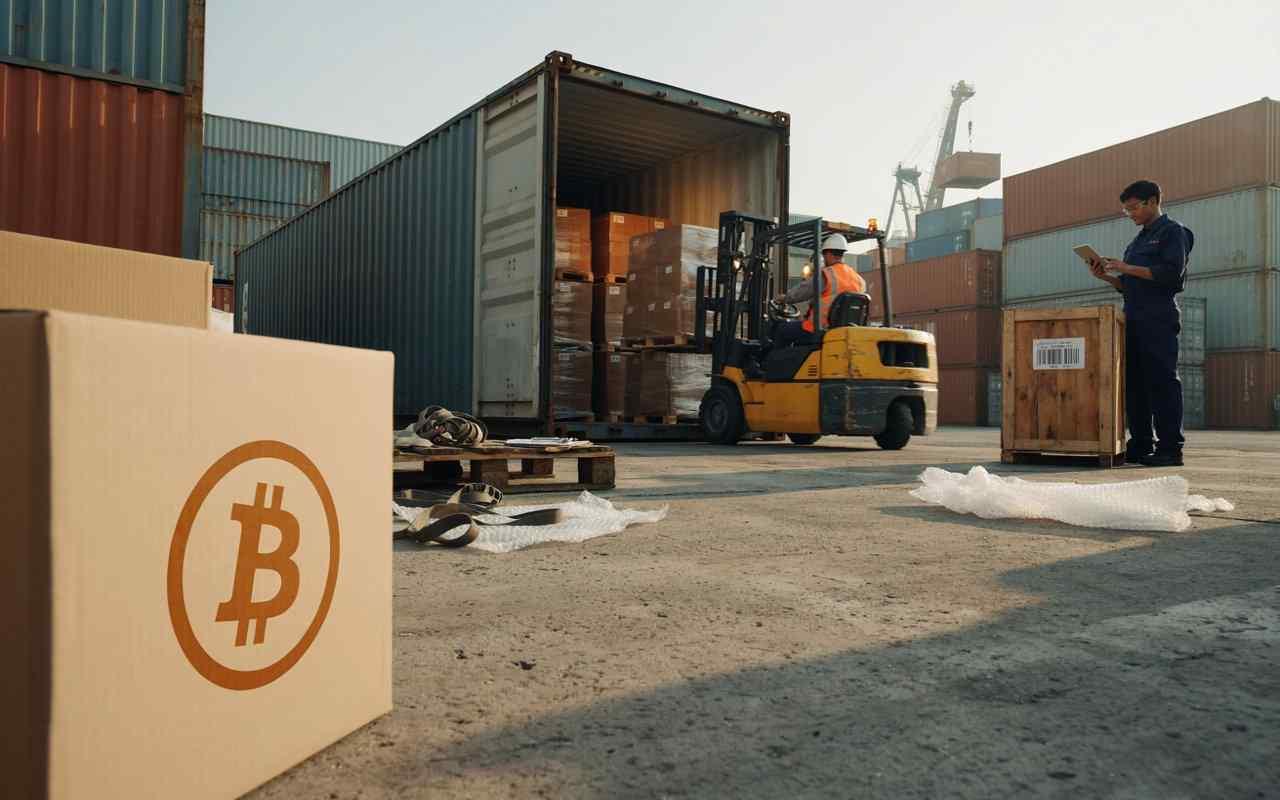
If you're wondering how to buy postage online for the first time, the process below covers every step, from entering an address to printing a shipping label online in one sitting.
- Enter your shipment details. Add the sender and recipient address, plus package weight and dimensions. Accurate numbers here prevent surcharges later.
- Pick your carrier and service. Choose USPS, UPS, FedEx, or another supported carrier and select a delivery speed that matches your deadline.
- Add customs information for international orders. Declare the content type and list every item inside the box before you move on.
- Review your rate. Confirm the quoted price matches your actual package weight before you continue to checkout.
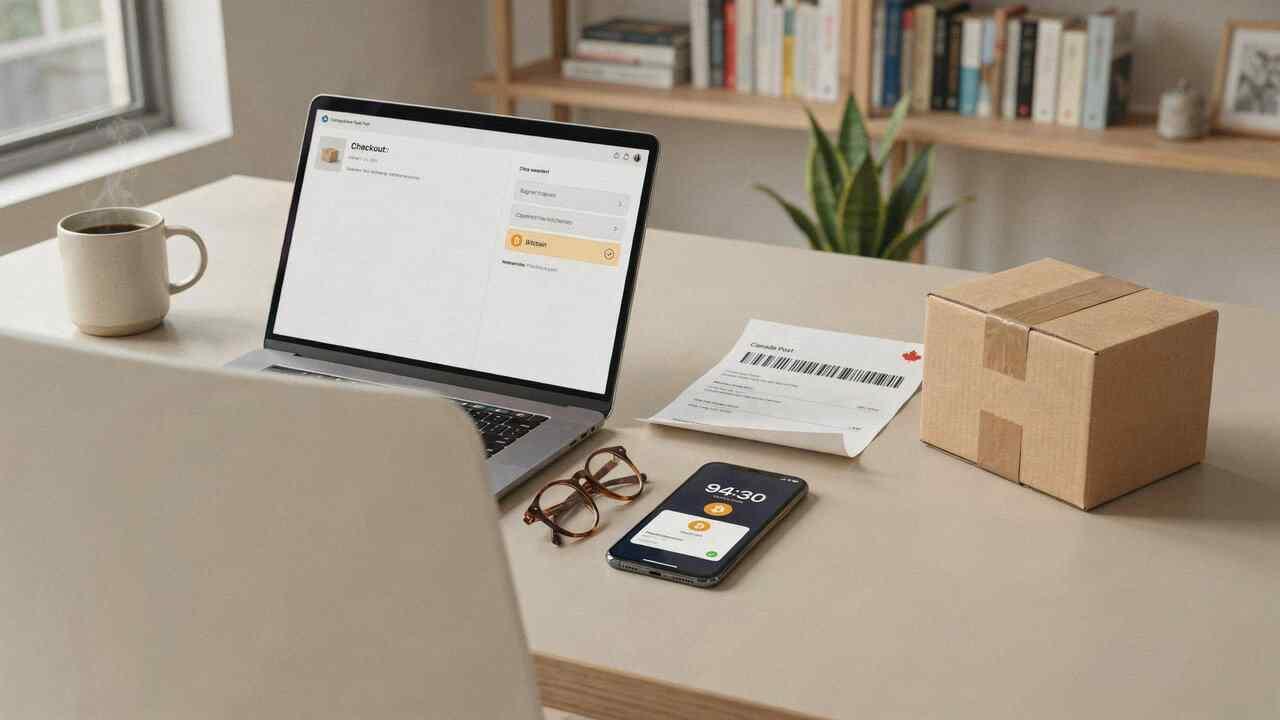
- Pay with Bitcoin. The platform generates an invoice with an exact BTC amount and a wallet address or QR code.
- Send payment from your wallet and wait for network confirmation. Most invoices stay valid for a short window, so send promptly.
- Print your shipping label as soon as payment clears, then attach it firmly to your package.
- Track your shipment through the carrier's system as it clears customs and moves toward delivery.
This sequence works for both domestic and international orders, but skipping step three means you can't ship internationally at all. Every crypto shipping label needs a completed customs form before it prints, no exceptions.
Customs Rules You Cannot Skip When You Ship With Crypto
Paying in Bitcoin doesn't exempt any package from customs law. Every international shipment needs a declared content type and an itemized list, no matter how you pay for the label.
Content types generally fall into a few categories:
- Merchandise — needs a tariff (HS) number and is subject to duties
- Gift — usually untaxed, though value still needs declaring
- Documents — must qualify as an envelope under a set thickness
- Returned Goods — items being sent back to their origin
- Sample — non-sale items sent for evaluation
Certain mistakes get packages held at customs almost every time. Watch for these:
- A declared weight that doesn't match the sum of your item weights
- Vague descriptions like "goods" or "personal use" instead of naming the item
- Marking merchandise as "no commercial value" to avoid duties
- Missing a tariff number the destination country requires
- Writing the declaration in a language other than English
Declare each item in plain English, list an accurate value, and make sure your total weight matches your item weights. A label paid for with crypto and a customs form filled out correctly moves through customs just as fast as any other shipment — delays come from bad paperwork, not from your payment method. For a closer look at the full customs form, see our international shipping guide.
Why Bitcoin Shipping Costs Less Than Retail Counter Rates
Retail postage counters charge the highest rate a carrier publishes. An online postage service that offers commercial rates accesses pre-negotiated bulk pricing and passes much of that discount straight to you as discount shipping labels, which is why comparing counter prices to online rates almost always favors cheap postage online.
Paying with crypto adds a second layer of savings on top of that. You skip currency conversion charges on international purchases, and you avoid the card network fees a checkout page often passes on to the buyer. There's no international transaction fee tacked onto your bank statement either, since a Bitcoin payment never touches your bank at all.
Combined with commercial-rate labels, crypto shipping can be one of the cheapest ways to ship a package internationally, especially if you ship the same route on a regular basis. Sellers who print dozens of labels a month feel this savings the most, since even a small fee difference compounds fast at volume.
The exact savings depend on your carrier, route, and package weight, so compare the quoted rate against your local post office counter price before you commit to a label. A quick side-by-side check takes under a minute and tells you exactly what you're saving on that specific shipment.
Managing Bitcoin Price Swings at Checkout
Bitcoin's price moves throughout the day, and that matters when you're paying a fixed-dollar shipping rate in BTC. A shipping platform locks your invoice at a set BTC amount for a short window, typically somewhere between 10 and 30 minutes.
Send your payment inside that window and the rate holds no matter what BTC does afterward. Wait too long, and the invoice expires, forcing you to generate a new one at a new rate that may cost more or less than the original quote.
Avoid this by keeping your wallet funded before you start the order, checking the current network fee before sending, and completing payment as soon as the invoice appears instead of saving the tab for later. Choosing a fee that's too low during a busy network period can also delay confirmation, which delays your label past the invoice window.
A moderate, current-market fee gets your transaction confirmed fast enough to stay inside the invoice window almost every time. If you ship often, keeping a small BTC balance ready to go removes this entire problem before it starts, which is the single best habit for reliable btc shipping.
Which Cryptocurrencies Work for International Shipping Labels
Bitcoin is the most common option, but it isn't the only one. Most crypto shipping platforms also accept Litecoin, Ethereum, Bitcoin Cash, and stablecoins alongside BTC.
Stablecoins are worth considering for larger international orders since their dollar value doesn't move between the moment you get a quote and the moment you pay. This removes the invoice-expiry problem entirely for high-value shipments where even a small price swing matters.
If your business already earns revenue through websites that accept cryptocurrency payments, spending that same balance on outbound shipping keeps your books simple. No fiat conversion is required on either end of the transaction, which saves accounting time as well as conversion fees.
Bitcoin Shipping vs. Paying With a Card
A card payment for international shipping runs through your bank, the card network, and often a currency conversion step. Any one of those parties can flag or delay the transaction, and each one adds its own fee before the label ever prints.
A Bitcoin payment runs through a single network: the blockchain itself. There's no card decline for "suspicious international activity," no waiting on a bank's fraud team, and no exchange-rate markup buried in the total.
The tradeoff is finality. A confirmed Bitcoin payment can't be reversed the way a card charge can be disputed, so double-check every shipment detail — address, weight, customs items — before you send payment. That single habit removes almost every risk crypto shipping carries.
Tracking an International Shipment Paid With Bitcoin
Your tracking experience doesn't change based on payment method. Once your label prints, the carrier assigns the same tracking number it would give any other shipment, and you follow that number through pickup, transit, customs clearance, and final delivery.
Keep your transaction ID and invoice number alongside your tracking number. If a customs delay or delivery question comes up, having both records ready lets support resolve it faster than searching your wallet history after the fact — you can look up your shipment anytime on our tracking page.
Common Mistakes to Avoid When You Pay for Postage With Crypto
First-time crypto shippers tend to repeat the same handful of errors. Catch these before you hit "pay" and your label prints clean the first time.
- Sending the wrong BTC amount. Underpaying, even slightly, can block label release until support corrects it.
- Letting the invoice expire. A stale invoice no longer reflects the current BTC price and needs to be regenerated.
- Entering the wrong package weight. This triggers postage-due notices or return fees after drop-off.
- Skipping the customs item list on an international order. This is the fastest way to get a package held.
- Assuming Bitcoin payment makes a shipment anonymous. Your name and address still travel with the package — only the payment method changes.
- Choosing too low a network fee during peak congestion. This delays confirmation and can push you past your invoice window.
Choosing the Right Online Postage Service
Not every online postage service handles crypto the same way, so check a few details before you commit to one. Confirm which carriers it supports, since USPS, UPS, FedEx, and international options like Canada Post each have different strengths depending on your destination.
Check how long the platform holds a Bitcoin invoice open, since a longer window gives you more room if network traffic slows your payment. Look for clear order recovery tools too — a good platform lets you pull up a past order using your transaction ID or invoice number without creating an account.
Finally, read the refund policy before you buy shipping labels online. Bitcoin payments can't be reversed on your end, so you want a platform that clearly explains how it handles cancellations, address corrections, and underpaid invoices before you're stuck mid-shipment.
Your Next Step
Stop routing shipping payments through a bank that adds fees to every foreign transaction. Enter your package details, choose your carrier, and pay with Bitcoin, Litecoin, or another supported crypto to get your international label printed in minutes — no account required.
Frequently Asked Questions
Can I ship internationally if I only have Bitcoin and no bank card?
Yes. A crypto shipping platform lets you pay the full postage cost in BTC, so you never need a card or bank account tied to the order.
How long does it take to get a shipping label after paying with Bitcoin?
Most platforms release your label as soon as the network confirms your transaction, which usually takes a few minutes depending on the fee you chose and current network traffic.
Do I still need a customs form if I pay for postage with crypto?
Yes. Every international shipment needs a completed customs declaration listing item type, quantity, weight, and value, regardless of how you paid for the label.
What happens if I send less Bitcoin than the invoice requires?
The platform typically holds the label until you send the remaining balance, since automatic release depends on receiving the exact invoice amount.
Can a business accept crypto payments and pay for shipping from the same wallet?
Yes. A business that already holds crypto revenue from customers can spend that same balance directly on shipping labels, avoiding a separate conversion to fiat currency in either direction.