You want to buy USPS Labels with Bitcoin instead of pulling out a bank card or waiting in a post office line. Your Bitcoin sits in a wallet doing nothing, and the post office window won't take it directly. Every guide you find online talks about "crypto shipping" in vague terms, throws a form at you, and never explains where your Bitcoin actually goes.
That confusion costs you time and, if you land on the wrong site, it can cost you money. Fake "bitcoin postage" scams exist, and underpriced labels get returned to sender with your package stuck in limbo.
CryptoPostage solves this the direct way: you enter your package details, pay with Bitcoin or another major coin, and print a real, USPS-valid label in minutes. This guide breaks down exactly how that works, what it costs, and how to avoid every common mistake people make the first time they try bitcoin shipping.
Does USPS Accept Bitcoin Directly?
No. USPS does not accept Bitcoin at the counter, on usps.com, or through any official USPS payment portal. This single fact gets left out of almost every page that ranks for this search term, and it's the reason so many people feel confused before they even start.
Here's what actually happens instead. A licensed postage reseller like CryptoPostage buys your shipping label from USPS using standard payment rails, then charges you in Bitcoin at the current exchange rate. You get a fully valid USPS label with real tracking, the same label you'd get from Click-N-Ship or a post office clerk.
The label carries no trace of how you paid for it. USPS scans it, tracks it, and delivers it exactly like any other label in the system.
How Bitcoin Postage Actually Works
Buying postage with crypto follows the same four steps every time, regardless of which carrier you choose. Here's the process broken down so you know exactly what to expect before you commit any funds.
Step 1: Enter Your Package Details
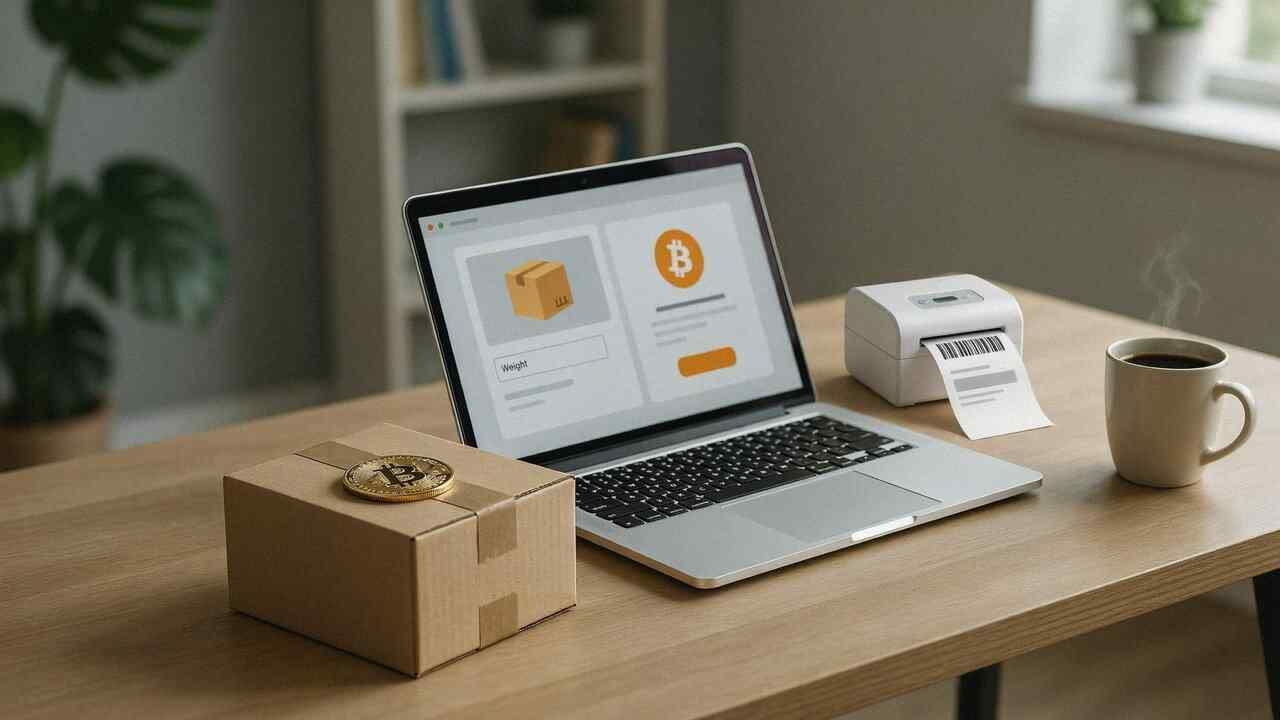
Start by entering your origin address, destination address, package weight, and dimensions. Choose your carrier (USPS, Canada Post, and others) and package type, such as a flat-rate box, envelope, or your own custom packaging. Accurate weight and dimensions matter here, because underpaying by even a few ounces triggers a postage-due notice and delays delivery.
Step 2: Pick Your Shipping Service
Compare rates across Priority Mail, Ground Advantage, Express, and Media Mail if your contents qualify. Each service shows its own delivery window, so you can weigh cost against speed. Commercial rate discounts apply automatically, meaning you often pay less than the retail counter price without doing anything extra.
Step 3: Pay With Bitcoin or Another Crypto
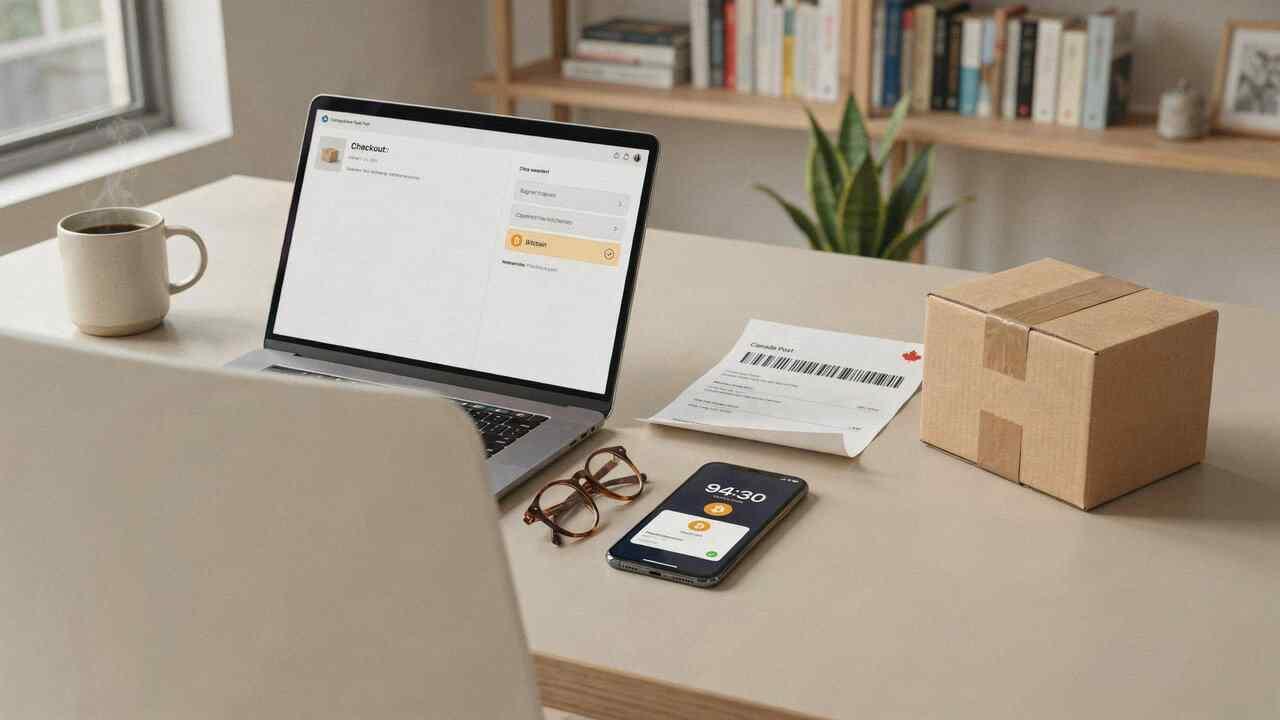
Once you select a rate, the checkout locks in a BTC price for a short window, usually 10 to 15 minutes, to protect you from mid-transaction volatility. Send the exact amount from your wallet to the address provided. Litecoin, Ethereum, and other coins often work the same way if you'd rather not use BTC specifically.
Step 4: Print and Ship
The moment your transaction confirms on the blockchain, your label becomes available to download and print. Attach it to your package, drop it in any USPS collection box, or hand it to a mail carrier. No account, no store visit, no cash required at any point.
Why Ship With Bitcoin Instead of a Card
Speed and privacy top the list of reasons people choose crypto postage. A card payment routes through a bank, a card network, and a payment processor, each adding a layer of data collection and potential decline risk. A Bitcoin payment settles directly between your wallet and the reseller's wallet, with no bank in the loop to freeze the transaction or flag it as unusual.
Merchant demand for this option keeps climbing. A late-2025 survey from PayPal and the National Cryptocurrency Association found that 39% of U.S. merchants now accept cryptocurrency payments, up sharply from prior years, with 85% expecting crypto payments to become standard within five years. Shipping and logistics sit right in that growth curve, since anyone running a small e-commerce store already holds crypto revenue from customers who paid that way.
International sellers benefit even more. Sending a wire transfer or using a card overseas often means extra fees and multi-day holds, while a Bitcoin transaction clears in the same amount of time no matter which country it starts or ends in.
BTC Shipping Fees: What You Actually Pay
Every crypto postage site claims "cheaper" pricing, but few explain the actual fee structure. Bitcoin shipping labels cost the same base rate as any commercial postage account, since the reseller buys directly from USPS at bulk pricing tiers unavailable to retail customers. That discount, typically 10-30% versus the post office window price depending on service and weight, comes from volume purchasing power, not from paying in crypto.
The only crypto-specific cost is a small network or processing fee, similar to what you'd pay a payment processor for a card transaction. Bitcoin's price moves fast, so locking your rate during checkout protects you from paying more if BTC drops mid-transaction. Always confirm the quoted price stays fixed once you send payment, since a legitimate crypto postage app never asks you to send "a little extra" if the price moves after the fact.
Choosing a Crypto Postage App You Can Trust
Not every site offering bitcoin shipping labels operates the same way, and the differences matter more than they look. A trustworthy crypto postage app publishes real terms of service, a working refund policy, and a support contact that responds to actual humans, not just a contact form that vanishes into a queue.

Look for three specific signals before you trust any provider with your shipment. First, check that the site generates a real USPS tracking number you can verify independently on usps.com, not just an internal order ID. Second, confirm the checkout locks your BTC price for a fixed window rather than recalculating it after you send funds. Third, read the refund policy before you pay, since unused labels should qualify for a refund back to a crypto address within a reasonable window, typically 14 days.
CryptoPostage has operated since 2019 with these exact protections in place, along with support for multiple carriers and package types beyond just USPS. Consistency over years in a market full of short-lived sites is itself a signal worth weighing.
Bitcoin Shipping for International Packages
International shipments add one extra layer that domestic labels skip: customs forms. Every package crossing a border needs a declared content type, value, and origin country, and this applies the same way whether you pay with a card or with Bitcoin.
A crypto postage app worth using auto-generates these customs documents from the same form you already filled out for the label itself. You enter item descriptions, quantities, and declared values once, and the checkout builds the correct paperwork behind the scenes. Skipping accurate customs values is one of the fastest ways to get a package held at a border, so treat that section with the same care as the weight and dimensions fields.
Bitcoin's cross-border speed becomes a real advantage here. A seller in the U.S. shipping to a buyer in Germany settles payment in minutes with BTC shipping, compared to the multi-day hold a bank wire or international card charge often triggers. That speed matters most for time-sensitive shipments like Express Mail International, where a payment delay can eat into the delivery window you're paying extra to guarantee.
Bitcoin Shipping for Businesses and High-Volume Sellers
Solo sellers running a shop on Etsy, eBay, or their own storefront often ship dozens of packages a week, and typing each address by hand doesn't scale. Bulk order tools let you upload a CSV file with every shipment's details at once, generating a full batch of labels from a single Bitcoin payment instead of paying order by order.
This matters more as crypto-paying customers become a bigger share of online revenue. Coinlaw's 2026 data shows Bitcoin accounts for roughly 40% of crypto retail purchases in the U.S., ahead of every other coin merchants accept. A seller who already collects Bitcoin from customers can spend that same balance directly on shipping costs instead of converting to fiat first, cutting out an extra exchange step and its fee.
WooCommerce and other storefront platforms increasingly support crypto postage plugins for this exact reason. Connecting your store directly to a bitcoin shipping account means rates calculate automatically at checkout, and labels generate the moment an order comes in, without you touching a wallet manually for every single sale.
Is It Safe and Legal to Buy USPS Labels With Bitcoin?
Yes, paying for shipping labels with Bitcoin is legal in the United States. You're purchasing a service (postage) from a licensed reseller, which is no different legally than buying anything else online with crypto. The transaction is a private commercial exchange, not an attempt to bypass any postal regulation.
Your responsibilities as a shipper don't change based on payment method. You still can't ship prohibited items, you still need to declare contents accurately on customs forms for international mail, and USPS still applies the same restrictions on hazardous materials, liquids, and batteries. Crypto payment only changes how you pay, not what you're allowed to send.
One safety note worth stating directly: never send Bitcoin to an address shared through a random message, forum post, or unsolicited email offering "discount postage." Legitimate crypto postage apps generate a unique payment address per order, shown directly on their own checkout page.
Common Bitcoin Shipping Mistakes to Avoid
First-time users tend to repeat the same handful of errors, and each one is avoidable with a little attention at checkout. Catching these before you pay saves you a returned package or a lost transaction.
- Underestimating weight or dimensions. Round up, not down. A package that arrives heavier than the paid label triggers a postage-due charge to the recipient.
- Sending the wrong crypto amount. Copy the exact wallet address and amount shown at checkout instead of typing it manually, and never send funds after the price-lock window expires.
- Skipping the tracking number. Always save your tracking number the moment your label generates, since email confirmations can land in spam folders.
- Ignoring package restrictions. Batteries, liquids, and hazardous materials carry specific carrier rules that apply regardless of payment method.
- Using an unverified site. Confirm HTTPS, a real refund policy, and a working support channel before entering any address or payment information.
- Forgetting the price-lock window. If your transaction confirms after the quoted rate expires, contact support before assuming the label is invalid, since most providers simply reissue the quote rather than cancel the order.
- Mixing up flat-rate and custom packaging. Using your own box under a flat-rate label triggers a surcharge, so match the package type field to what you're actually shipping.
Your Next Step
You now know how bitcoin shipping actually works, what it costs, and what separates a legitimate crypto postage app from a risky one. The fastest way to see it in action is to run a real quote: enter one package you need to ship today and compare the BTC price against what you'd pay at the counter.
Frequently Asked Questions
Does USPS track packages the same way when I pay with Bitcoin?
Yes. The label generated through a crypto postage app is a standard USPS label with a real tracking number. USPS scans and delivers it exactly the same way regardless of how you paid for it.
What happens if the Bitcoin price changes between checkout and payment?
A reliable crypto postage app locks your BTC price for a short window, usually 10-15 minutes, so the amount you owe stays fixed. If that window expires before you pay, you simply request a new quote at the current rate.
Can I use cryptocurrency other than Bitcoin to pay for USPS postage?
Most crypto postage platforms support several coins beyond BTC, including Litecoin and Ethereum. Check the payment options at checkout, since coin availability varies by provider and can change over time.
Do I need an account to buy postage with crypto?
No. Most crypto postage apps, including CryptoPostage, let you generate and pay for a label without creating an account or verifying your identity, beyond an email address for order recovery.
What if my package gets returned after I pay with Bitcoin?
Unused or returned labels typically qualify for a refund back to a crypto wallet address, usually within 14 days of purchase. Contact the provider's support team with your tracking number to start the refund process. You can also check current shipment status anytime through order tracking, or review more questions on the full FAQ page.