Your card gets declined at checkout, your bank flags a shipping charge as suspicious, or you simply don't want your postage purchase tied to a personal account. Now your package sits unshipped while you wait on hold with customer support. That delay costs you a sale, a deadline, or a customer's trust.
Bitcoin shipping labels solve this. You pay for real USPS, UPS, FedEx, or Canada Post postage with Bitcoin or another cryptocurrency, and you get a printable label in minutes — no bank account, no card network, no waiting.
This guide walks through exactly how bitcoin labels work, what changes when you pay with crypto instead of cash, and where the real trade-offs sit.
What Is a Bitcoin Shipping Label?
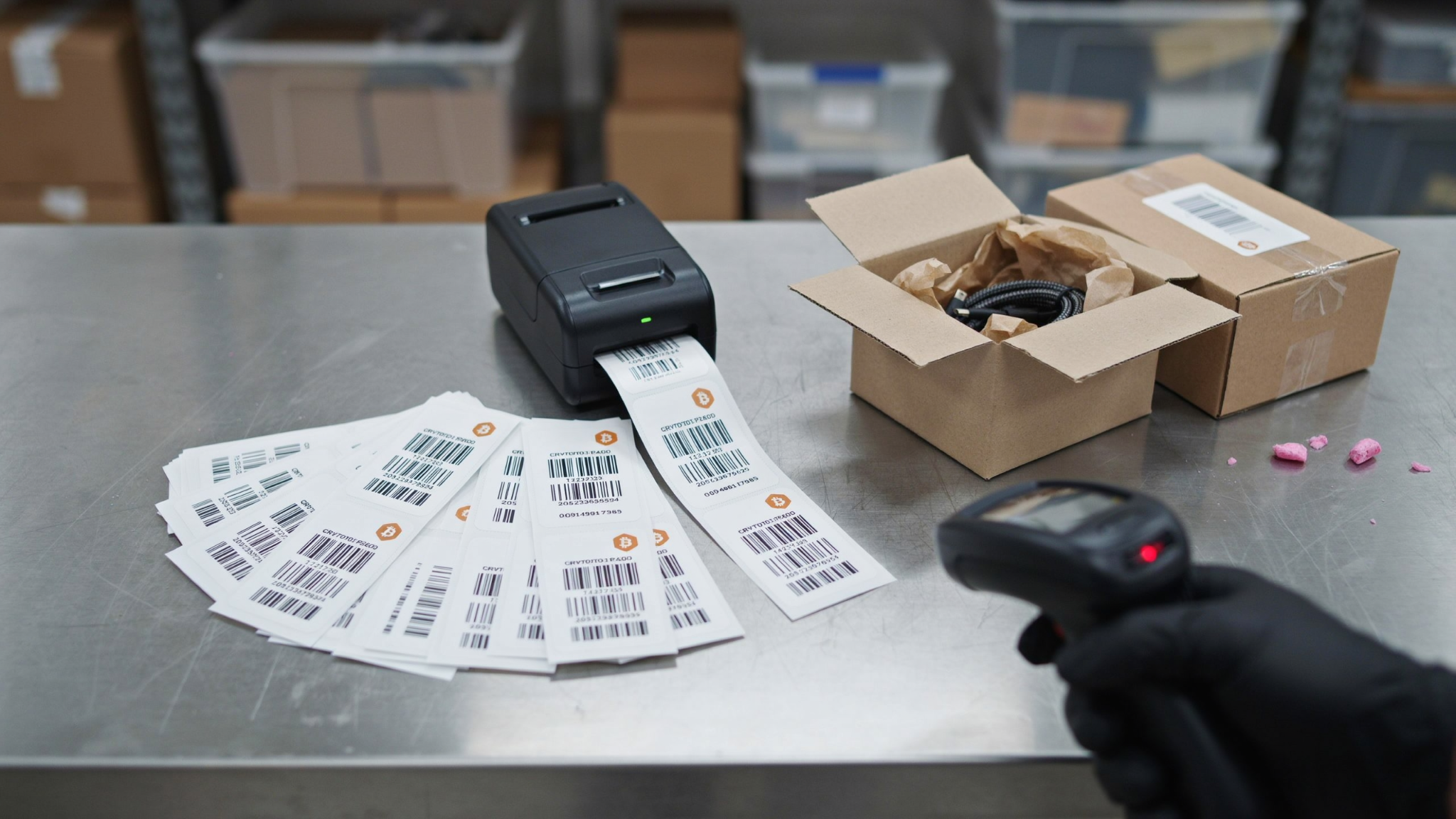
A bitcoin shipping label is a standard carrier shipping label — the same barcode and postage carriers scan at any counter — purchased with cryptocurrency instead of a credit card. The label itself carries no crypto data. It looks identical to a label bought at the post office.
The difference happens entirely at checkout. Instead of entering card details, you send Bitcoin, Litecoin, or another supported coin to a payment address. Once the network confirms the payment, the platform generates your label as a downloadable PDF.
Search engines see this searched as "bitcoin label," "crypto shipping," and even the mashed-together term "bitcoin shipping labels." All three point to the same idea: postage paid in crypto, printed at home.
How Bitcoin Shipping Labels Work, Step by Step
The process runs through five stages. Each one takes seconds if you have your shipment details ready.
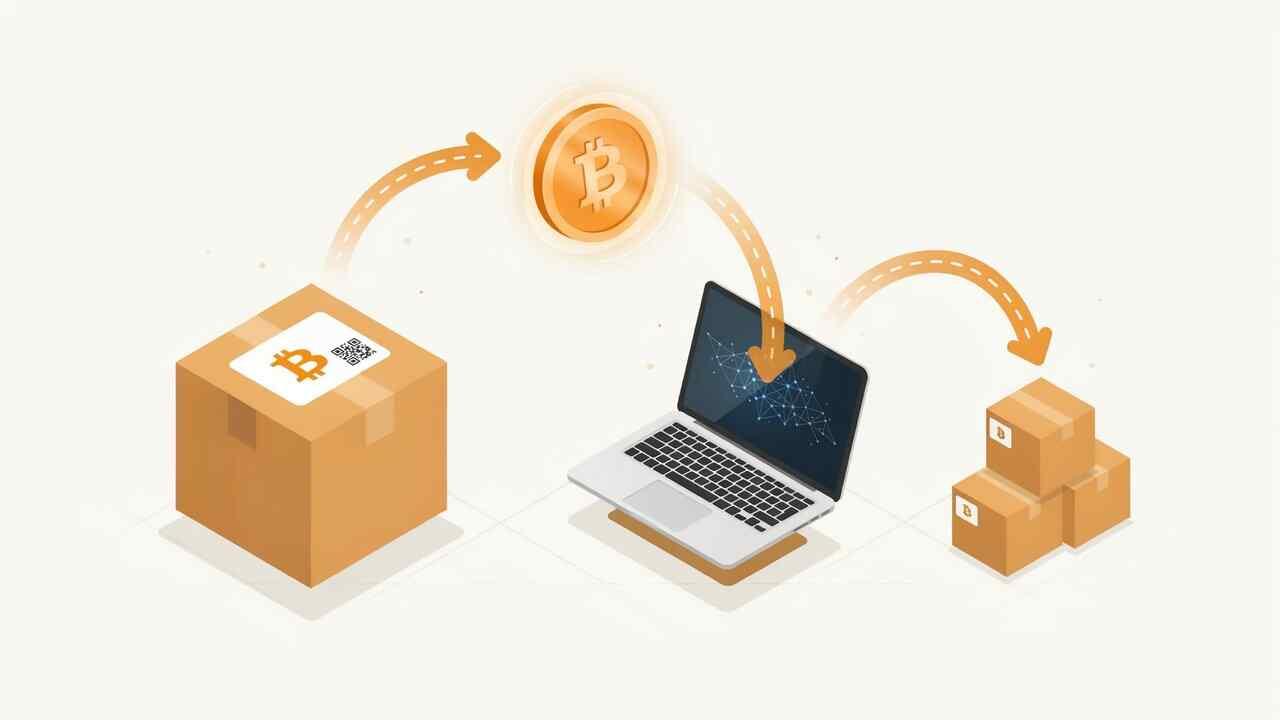
Step 1 — Enter Your Package Details
You enter the sender and recipient addresses, package weight, and dimensions. Most platforms let you paste a full address and auto-fill the fields. Accurate weight matters here — carriers charge extra for underpaid postage, so round up rather than guess low.
Step 2 — Compare Real-Time Rates
The platform pulls live rates from USPS, UPS, FedEx, and other carriers based on your package details. You pick the service level you need — Ground, Priority, Express — and see the exact price before paying anything.
Step 3 — Pay With Bitcoin or Another Crypto
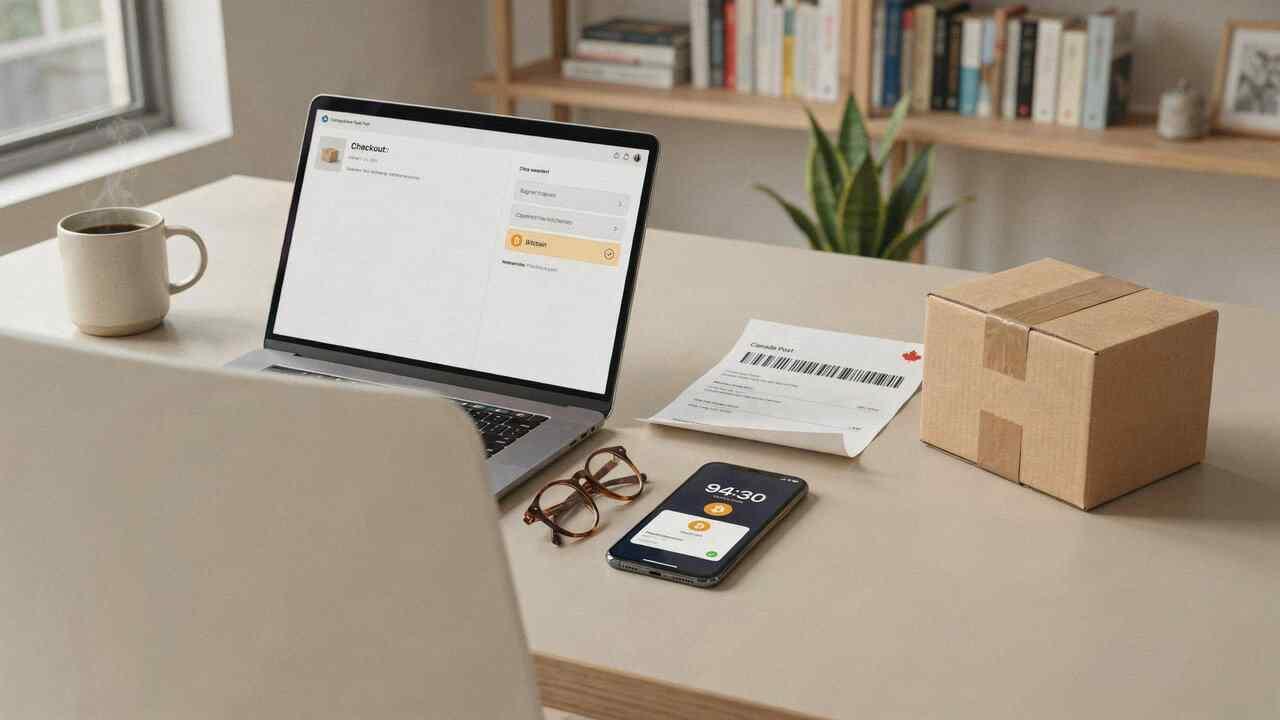
You select your coin, and the platform locks a price in USD and converts it to the current crypto amount. You send payment to the generated address from any wallet. Most confirmations complete within one blockchain confirmation, often under 10-15 minutes depending on network conditions.
Step 4 — Download Your Label
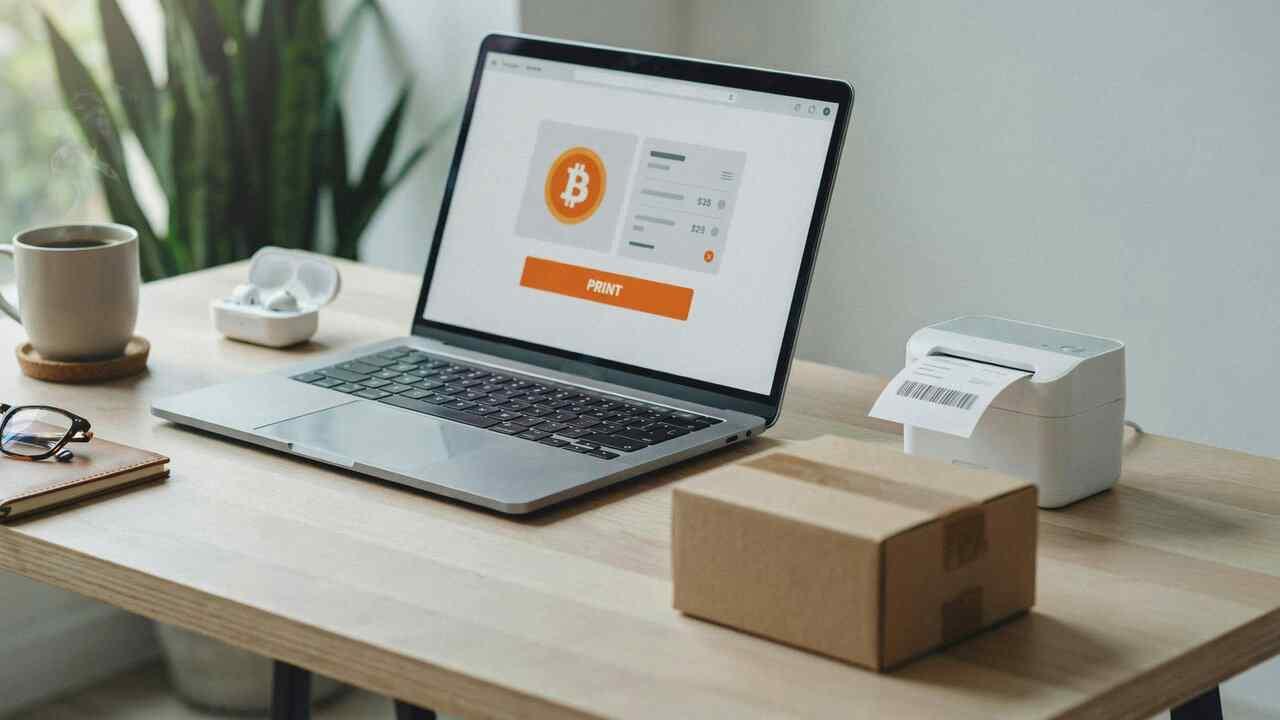
Once payment confirms, the platform generates your label automatically. You download a PDF, print it on standard paper, and tape it to your package. No account creation, no login, no waiting for email approval in most cases.
Step 5 — Drop Off or Schedule a Pickup
You drop the labeled package at any carrier location, blue mailbox (for USPS), or schedule a home pickup through the carrier's own system. The label works exactly like one bought at the counter, because it is one.
Why the Price Locks in USD, Not Bitcoin
Bitcoin's price moves throughout the day. A platform that charged you in BTC without locking the rate would expose both sides to volatility risk during the payment window.
Reputable crypto shipping platforms lock the USD postage price the moment you click "pay," then calculate the crypto amount due at that instant. You know your exact shipping cost before you send a single satoshi. If the price moves after that lock, it doesn't affect your order — you already agreed to a fixed number.
This detail matters because it separates a well-built platform from a sloppy one. Ask any provider how their rate lock works before trusting them with an international shipment.
Which Coins Can You Actually Use?
Bitcoin gets top billing because it's the coin most platforms built their systems around first. Most crypto shipping platforms today accept more than just BTC, though the exact list varies by provider.
Bitcoin (BTC) remains the default option and the one most guides reference, even when the platform supports several coins. Litecoin (LTC) confirms faster on its network and costs less in transaction fees, which makes it a common second choice for smaller label purchases. Monero (XMR) appeals to buyers who want transaction-level privacy baked into the coin itself, not just the payment method. Some platforms also support Ethereum, Bitcoin Cash, Dogecoin, and stablecoins like USDC for buyers who want to avoid price volatility entirely between wallet and checkout.
If a platform only lists Bitcoin at checkout, ask whether other coins are planned. Coin variety signals a platform actively maintaining its payment infrastructure rather than running a bare-minimum integration.
Bitcoin Label vs Traditional Postage: What Actually Changes
The physical shipping process stays identical. Carriers don't know or care that you paid in crypto — they scan a barcode and move a package.
What changes is the payment layer. You skip the bank, skip the card network, and skip any purchase restriction tied to your financial institution. You also often access commercial-rate pricing that isn't available at a retail post office counter, since these platforms buy postage in bulk through carrier partner accounts.
Speed changes too, but not always in your favor. A card payment clears instantly. A crypto payment needs at least one network confirmation, so plan for a short delay compared to swiping a card at the counter.
Privacy: What Crypto Payment Does and Doesn't Hide
This is where most competitor sites oversell. Pay with Bitcoin removes your name and card number from the payment trail — no bank statement line item reads "shipping label purchase."
It does not hide your shipping address. USPS, UPS, and FedEx scan and route packages using the physical addresses on the label, regardless of how you paid. If full anonymity matters to your shipment, the payment method is only one piece of that picture.
Whether you search "bitcoin label," "bitcoin shipping label," or the single-word "bitcoinshippinglabels," you'll land on tools built around this same limitation. Understand it going in, and you'll set the right expectations.
International Shipments and Customs With Crypto Postage
International bitcoin shipping labels require one extra step: a customs declaration. You classify your package and list its contents before the label generates.
Choose the correct content type. Most platforms offer categories like Merchandise, Gift, Documents, Returned Goods, and Sample. Merchandise triggers potential import duties for the recipient; Gift typically does not, though you may still need to declare a value.
List every item accurately. You need a quantity, plain-English description, declared value in USD, and total weight for each item. Vague descriptions like "goods" or a declared value of "$0" are the top reasons customs holds a package.
Match your tariff number to merchandise shipments. A public tariff lookup tool lets you search an item name and find its correct code. Skipping this step on a merchandise shipment is a common cause of customs delays.
Avoid the classic mistakes. Under-declaring value, mismatched package weight versus declared item weight, and non-English descriptions all get flagged by customs officials more often than accurate declarations do.
Get this right and your international bitcoin shipping label clears customs as smoothly as one paid for with a card — because customs officials never see the payment method at all.
Refunds and Unused Labels When You Paid in Crypto
Unused or unscanned labels are typically refundable within a set window — commonly 14 to 15 days, depending on the platform's policy. Request a refund by providing your order or tracking number.
Here's the part competitors skip: crypto refunds usually return value in crypto, not the original USD amount you paid. If Bitcoin's price dropped since your purchase, your refund buys less BTC for the same USD value, and vice versa if the price rose. Read the refund policy before you buy a label you might not use, especially for higher-value international shipments.
Tax Considerations When You Pay With Bitcoin
Spending cryptocurrency is treated as a taxable event by the IRS in the United States. When you pay for a shipping label with Bitcoin, you're technically disposing of an asset, and any gain or loss between what you paid for that Bitcoin and its value at the time of the transaction is reportable.
This surprises a lot of people who assume "spending crypto" works like spending cash. It doesn't. Keep a simple record of the date, amount, and USD value at the time of each label purchase so tax season doesn't turn into a scramble.
Common Mistakes to Avoid When Buying a Bitcoin Label
- Underestimating package weight. Carriers return underpaid packages or bill the difference — always round up.
- Sending the wrong crypto amount. Confirm the exact amount and network before sending; a shortfall can delay label generation.
- Skipping the rate lock check. Confirm the platform fixes your USD price before payment, not after.
- Vague customs descriptions. "Electronics" gets flagged; "USB charging cable" does not.
- Losing your recovery code. Most crypto shipping platforms don't require an account, which means your order recovery token is your only way back into an order. Save it immediately.
Bulk Shipping With Crypto: What Changes at Scale
Sellers moving more than a handful of packages a week need a faster workflow than typing each address by hand. Most crypto shipping platforms support CSV import, letting you upload a spreadsheet of orders and generate a full batch of labels in one pass.
Bulk orders usually still settle in a single crypto payment covering the entire batch, rather than one transaction per label. This matters for e-commerce sellers running high order volume through platforms like Shopify or WooCommerce, since it keeps the payment step from becoming a bottleneck.
Check whether your platform's plugin integrates directly with your storefront before committing to a bulk workflow. A direct plugin connection pulls order details automatically and cuts out manual data entry entirely, which saves real time once you're shipping dozens of packages a day.
Security Checks Before You Send Payment
Crypto payments don't reverse once confirmed, so verify a few things before you send anything. Check that the payment page loads over HTTPS and that the wallet address matches exactly what the platform displays — malware on a compromised device can sometimes swap a clipboard address, so paste and then double check the first and last four characters.
Confirm the USD total on screen matches the rate you compared earlier in the process. Legitimate platforms display this total clearly and won't ask you to pay a different amount through a separate channel, email, or chat message.
If a "customer support" contact reaches out first asking you to resend payment or verify your order through an outside link, treat that as a red flag. Real support teams respond to tickets you open, not the other way around.
Your Next Step
Pick a shipment sitting in your queue right now, weigh it accurately, and run it through the rate comparison before you commit to a carrier. Confirm the USD price locks before you send any crypto, and save your recovery code the moment you get it. That's the entire difference between a smooth bitcoin shipping label purchase and a support ticket.
Frequently Asked Questions
Do I need a crypto wallet to buy a bitcoin shipping label?
Yes, you need a wallet that can send Bitcoin or your chosen coin. Any standard wallet app works — you don't need an exchange account or special software built for shipping.
How long does it take to get my label after paying?
Most labels generate within minutes of blockchain confirmation. Some platforms accept the payment after one confirmation; others wait for additional confirmations on larger orders, which adds a few extra minutes.
Can I buy international bitcoin shipping labels the same way?
Yes. The purchase flow stays the same — you just complete a customs declaration with item details, value, and a tariff number for merchandise shipments before the label generates.
What happens if I overpay in crypto by mistake?
Contact support with your transaction ID. Most platforms refund the difference back to your wallet in crypto once they confirm the overpayment, though processing times vary by provider.
Are bitcoin shipping labels legal to use for business shipping?
Yes. The label itself is standard carrier postage — the payment method has no bearing on its validity. Businesses use crypto shipping labels for the same reasons individuals do: speed, lower fees, and payment flexibility.